Bill Kelley

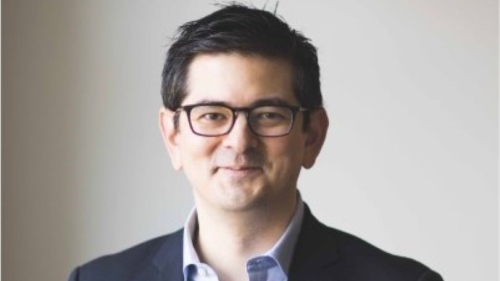
Bill KelleyAssociate Professor
Ph.D., Washington University, 1999

Office: (603) 646-3446, Moore 350
Lab: (603) 646-0084, Moore 322 
bill.kelley@dartmouth.edu

Go to the Kelley Lab Web site

Interests

My research program explores three lines of research using neuroimaging, neuropsychological, and behavioral techniques. Functional magnetic resonance imaging (fMRI) serves as our primary neuroimaging tool. Three overarching questions motivate my lab's research.

Neural Correlates of Memory. This line of research addresses a wide range of questions related to the neural representation of memory. For example, how do we form memories for different kinds of information- such as an unfamiliar face, a tune we hear on the radio, or something we read in the newspaper? What are the neural components of remembering? How does emotion impact memory? And why are some individuals better memorizers than others?

Neural Correlates of Self. Our second line of research is a colaborative effort with Dr. Todd Heatherton that investigates how various cognitive and emotional component processes give rise to a unitary sense of self. With support from the National Science Foundation, we are currently using fMRI and anatomy-based diffusion tensor imaging (DTI) to examine individual differences in how people process information about the self.

Neural Correlates of Reward. The final line of research is also a collaborative effort with Dr. Todd Heatherton and Dr. Paul Whalen that investigates a putative shared neural architecture for the representation of different kinds of reward. This work is in its early stages and is supported by a research grant from the National Institute on Drug Abuse (NIDA). Specifically, we are investigating the neural response to stimuli that are considered to be rewarding to different groups of people. For example, our recent work has demonstrated that viewing attractive, opposite-sex faces engages the nucleus accumbens more so than viewing unattractive faces. This same brain region is similarly responsive when restricted eaters (i.e., dieters) view images of food, and also when avid players of online video games view images of virtual equipment that is judged to be desirable for their virtual avatar.

Selected publications

Go to:  More Citations on PubMed

Kelley, W.M., Miezin, F.M., McDermott, K.B., Buckner, R.L., Raichle, M.E., Cohen, N.J., Ollinger, J.O., Akbudak, E., Conturo, T.E., Snyder, A.Z., Petersen, S.E. (1998). Hemispheric specialization in human dorsal frontal cortex and medial temporal lobe for verbal and nonverbal memory encoding. Neuron, 20: 927-36, Go to: Web Version

Kelley, W.M., Macrae, C.N., Wyland, C.L., Caglar, S., Inati, S., and Heatherton, T.F. (2002). Finding the self? An event-related fMRI study. Journal of Cognitive Neuroscience, 14, 785-794. Go to: Web Version

Kraemer, D.J.M., Macrae, C.N., Green, A.E., and Kelley, W.M. (2005). The sound of silence: Spontaneous musical imagery activates auditory cortex. Nature, 434, 158. Go to: Web Version

Wig, G.S., Grafton, S.T., Demos, K.E., and Kelley, W.M. (2005). A causal role for neural activity reductions during repetition priming. Nature Neuroscience, 8, 1228-1233. Go to: Web Version

Wig, G.S., Grafton, S.T., Demos, K.E., Wolford, G.L., Petersen, S.E., and Kelley, W.M.  Medial temporal lobe BOLD activity at rest predicts individual differences in memory ability in healthy young adults. (2008) Proc Natl Acad Sci U S A, 25, 18555-60, Go to: Web Version

Last Updated: 11/21/09