Tag Archive | "Alumni Award"

Alumni Research Award Recipient, Tyler Pavlowich

Alumni Research Award Recipient, Tyler Pavlowich

Coral reef ecosystems harbor tremendous biodiversity, perform important functions in the biogeochemical cycles of the planet, and provide the foundation upon which humans create unique and diverse relationships with nature.

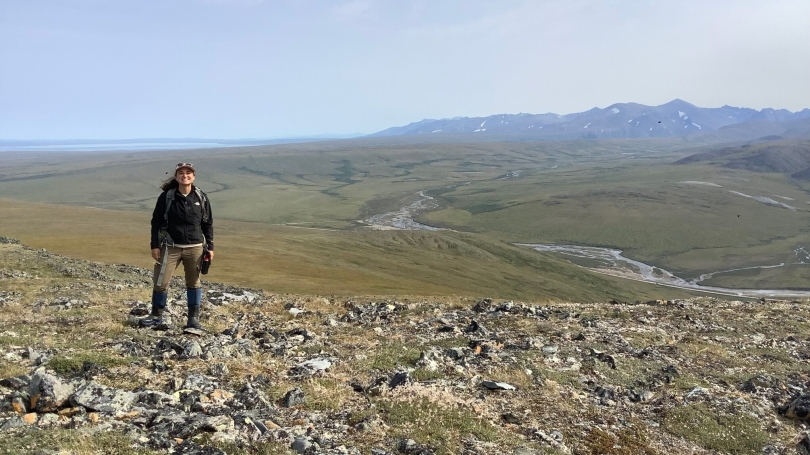
In the summer of 2012, I traveled to Buen Hombre, Dominican Republic—a community of 600 residents on the northwestern coast of the country—to assess the status and functioning of coral reef fisheries accessed by artisanal fishermen. With the help of an undergraduate research assistant, Molly Wilson ’13, I performed fish-community surveys, benthic assessments, catch surveys, and social research on how the fishing system in Buen Hombre operates.

Thanks to the scuba equipment purchased with the Alumni Research Award, I was able to sample deeper reef sites that play an important role in the ecological dynamics of the area. We found that nearshore reefs are heavily exploited to the point that some areas have collapsed into an unhealthy, algae-dominated state.

Herbivorous fish maintain coral health by clearing away macro-algae that can outcompete slow-growing hard corals for space. This presents a major challenge for fisheries management because parrotfish, the Caribbean’s most abundant and effective herbivore, currently comprise at least fifty percent of fishermen’s catch in Buen Hombre.

The Alumni Research Award was an integral part of my experience in Buen Hombre, allowing me to perform more thorough and productive research. My future work will include modeling fish population dynamics to help the community and resource managers establish harvest guidelines and promote ecosystem recovery.

by Tyler Pavlowich, Ecology and Evolutionary Biology (EEB)

Photo courtesy of Tyler Pavlowich


Posted in Awards, Featured Stories, People, PhD Programs, ProgramsComments (0)

MCB Department News

MCB Department News

The Molecular and Cellular Biology (MCB) program welcomed 26 new students this fall term, and we extend our congratulations to the 18 students who received their PhDs this year.

Jamie Moseley, PhD, has joined the faculty in the Department of Biochemistry and is a member of the MCB faculty.  We quickly solicited his help to redesign our MCB website. Our department recognizes the importance of web visibility, and intends to use the resource to project our research opportunities to students and faculty across the globe. We feel that our new website will attract more students and boost our recruiting efforts.

Christen DiPetrillo, of biological sciences, and Michael Molloy of microbiology/immunology, were selected as Copenhaver Fellows this year. Maria Hindt of biochemistry received a 2010 NSF Fellowship, and first-year MCB student David Tobin received a GK-12 Fellowship for Teaching from the NSF.

This past fall, MCB initiated an outreach program with visits to several New England colleges. Faculty and students visited colleges to present research seminars and talk with undergraduates about Dartmouth and the MCB program.  Next year, we will expand the program to colleges in other parts of the United States.

By Janet Cheney

Top Photograph: Jamie Moseley, PhD, new faculty member in Department of Biochemistry

Bottom Photograph: First year MCB graduate students

Posted in Awards, Featured StoriesComments (0)

Graduate Alumni Research Award: Karlene Barrett

Graduate Alumni Research Award: Karlene Barrett

In honor of  Graduate Appreciation Week, the Graduate News Forum will be highlighting the recipients of the 2010 Graduate Alumni Research Awards throughout the week.  Applications for the 2011 Graduate Alumni Research Awards are due on May 5th.

Serotonin and the Sudden Infant Death Syndrome (SIDS)

Sudden Infant Death Syndrome (SIDS) is the sudden death of an infant during a sleep period, which remains unexplained after autopsy and examination of the death scene and medical history.  Abnormalities in the serotonin system (a neurotransmitter released from cells arising in the brainstem) have been found in about seventy percent of SIDS cases studied, but whether these changes are the cause of sudden death is unknown.  My research investigates how various manipulations of the serotonin system affect cardio-respiratory control during early development.  The Graduate Alumni Research award has allowed me to use high performance liquid chromatography to begin to characterize changes in the levels of serotonin and other neurotransmitters in the brainstems of transgenic mice developed for these studies.

Learn more about the Graduate Alumni Research Awards here.

By Karlene Barrett

Posted in Awards, Featured Stories, StudentsComments (0)

Graduate Alumni Research Award: Laurel Symes

Graduate Alumni Research Award: Laurel Symes

In honor of Graduate Appreciation Week, the Graduate News Forum will be highlighting the recipients of the 2010 Graduate Alumni Research Awards throughout the week.  Applications for the 2011 Graduate Alumni Research Awards are due on May 5th.

Song Evolution and Speciation in Tree Crickets

Despite our understanding of the evolutionary process, many questions remain regarding the genetic and behavioral processes that generate new species. The Alumni Research Award has allowed me to research the processes that lead to divergence and speciation by studying how the calls of tree-cricket species differ in sixteen sites across the eastern United States. These comparisons suggest that the constellation of species present in a site affects the calls of the other species present. In 2011, I will continue to study female-mating preferences in these sites to investigate the role of female-mate choice in isolation and species formation.

Learn more about the Graduate Alumni Research Awards here.

By Laurel Symes

Posted in Awards, Featured Stories, StudentsComments (0)

Graduate Alumni Research Award: Megan Roberts

Graduate Alumni Research Award: Megan Roberts

In honor of the upcoming Graduate Appreciation Week, the Graduate News Forum will be highlighting the recipients of the 2010 Graduate Alumni Research Awards throughout the week.  Applications for the 2011 Graduate Alumni Research Awards are due on May 5th.

A False Sense of Control about Alcohol Consumption

The term self-regulation refers to the exertion of control over oneself in order to inhibit the way one would otherwise think, feel, or behave. My research looks at the self-regulation of alcohol consumption, and is aimed at identifying individuals who believe that their self-regulation abilities are better than they actually are. With this information, I can examine how cognitive measures assessed at baseline predict drinking self-regulation failures assessed in a follow-up. I am very grateful for the Graduate Alumni Research Award, which allowed me to pay a large, national sample of individuals to participate in an online study.

Learn more about the Graduate Alumni Research Awards here.

By Megan Roberts

Posted in Awards, Featured Stories, StudentsComments (0)

Graduate Alumni Research Award: Ross O’Hara

Graduate Alumni Research Award: Ross O’Hara

In honor of the upcoming Graduate Appreciation Week, the Graduate News Forum will be highlighting the recipients of the 2010 Graduate Alumni Research Awards throughout the week.  Applications for the 2011 Graduate Alumni Research Awards are due on May 5th.

Determining How Affective Forecasting Influences Health Decision-Making

Many behaviors that can harm us are fun or exciting, whereas many behaviors that keep us healthy are discomforting or frightening. My dissertation explores how affective forecasting, the process of anticipating the emotional consequences of future events, influences college students’ health decisions. I studied this question with both a laboratory experiment and a field experiment conducted with the assistance of Casey Gardiner, ’11. I also examined two different health contexts: a risk behavior (binge drinking) and a preventive behavior (flu vaccination).  I truly appreciate the financial support of the Alumni Research Award, which provided incentives for my study participants.

Learn more about the Graduate Alumni Research Awards here.

By Ross O’Hara

Photograph: Ross O’Hara and his undergraduate research assistant, Casey Gardiner ’11, conduct field research.

Posted in Awards, Featured Stories, StudentsComments (0)

Graduate Alumni Research Award: Josiah Proietti

Graduate Alumni Research Award: Josiah Proietti

In honor of the upcoming Graduate Appreciation Week, the Graduate News Forum will be highlighting the recipients of the 2010 Graduate Alumni Research Awards throughout the week.  Applications for the 2011 Graduate Alumni Research Awards are due on May 5th.

Developing Male-Focused Sexual Assault Prevention Programs on College Campuses

All college institutions struggle with sexual assault. However, despite significant efforts to educate students about sexual assault and to provide support services to assault survivors, it is estimated that one in five college women will be victims of sexual assault by the time they graduate.

Men account for over ninety percent of sexual-assault incidents. Thanks to a recent alumni grant, Dartmouth’s male undergraduates have been compensated to share their experiences navigating the complex social world of collegiate dating and drinking. With this data, Dartmouth’s sexual assault prevention programs will be modified to better fit our campus’s needs.

Learn more about the Graduate Alumni Research Awards here.

By Josiah Proietti

Posted in Awards, Featured Stories, StudentsComments (0)

Graduate Alumni Research Award: Timothy Blazina

Graduate Alumni Research Award: Timothy Blazina

In honor of the upcoming Graduate Appreciation Week, the Graduate News Forum will be highlighting the recipients of the 2010 Graduate Alumni Research Awards throughout the week.  Applications for the 2011 Graduate Alumni Research Awards are due on May 5th.

Measuring Osmium Drainage to Understand Rock-Weathering Processes

My research uses radiogenic-isotope geochemistry to understand elemental cycling and rock-weathering processes on the North Island of New Zealand. The two main objectives of my research are to quantify how much osmium (element number 76) is draining from the island and identify what the isotopic composition of the waters are, and to explore the osmium isotope system as a proxy for rock-weathering processes. Different rock types release different amounts and varying isotopic compositions of osmium into water, and therefore this isotope system may provide quantitative insights into weathering processes in New Zealand and around the world. The Graduate Alumni Research Award helped me to meet these objectives by providing funding for my trip to New Zealand this past summer to collect water samples.

Learn more about the Graduate Alumni Research Awards here.

By Timothy Blazina

Posted in Awards, Featured Stories, StudentsComments (0)

MD/PhD Receives Alumni Award

MD/PhD Receives Alumni Award

Christopher Audu

Thanks to the generosity of Dartmouth graduate alumni and the Arts and Sciences Graduate Alumni Association at Dartmouth (ASGAAD) Alumni Fund, the Graduate Studies office selects outstanding Arts and Sciences graduate students each year and awards them additional funds to facilitate their research.  This year’s Alumni Award winners include Christopher Audu, an international student from Nigeria pursuing a joint MD/PhD in Chemistry.

Towards A Drug Candidate Against BK Virus Associated Nephropathy

How can we reduce the number of long-term kidney rejections, due to BK viral infections that occur after kidney-transplant surgery?  The answer may lie in how the BK virus uses its coat protein, VP1, to adhere to kidney cells. We know that BK VP1 uses a glycoprotein as its receptor when binding to mammalian cells. We also know that the receptor can interact with a groove found between the BC and HI loops of VP1.  Hence, my work has focused on developing a smaller protein construct containing the BC/HI loops from VP1. With this award I have been able to show, using techniques such as Fluorescence Assisted Cell Sorting (FACS) and in vitro fluorescent cell assays, that our protein construct is viable as a high throughput drug-screening tool against BK VP1.

by Christopher Audu

Posted in Awards, Interdisciplinary Programs, People, PhD Programs, Programs, StudentsComments (0)


Subscribe to the Grad News Forum

Please enter your email address to receive our monthly electronic update. You can unsubscribe at anytime.
* = required field

Photos on flickr

Graduate Studies Home