|
May 19, 2006
Welcome back to Dartmouth for this the 192nd Alumni Council — I hope that
while you are here you will feel the energy that is Dartmouth today. Susan and
I are sorry that we were not able to welcome you over in our garden for the
reception — but there have not been many outside receptions around here in the
last week or so!
I want to congratulate Rick Routhier as he completes his service as
President of the Council. He has been incredibly active and generous with his
time in support of your work and in support of the College's work. We welcome
Martha Beattie and know that she will continue this remarkable record of
leadership. Each of you does that. Dartmouth depends upon volunteers and
you set the bar high for this service — symbolized by the two graduates
recognized tonight. I think I first worked with Bob Conn when I came to an
event he organized down in Charlotte twenty or so years ago. And I have seen
him at many events over the years, always quietly working to make Dartmouth a
better place. And Kate Aiken has done the good work of the College on both
coasts and in Hanover. She has stepped up regularly and we are the richer and
better as a result.
On Monday of this week, we held a memorial service for President James O.
Freedman. The 15th occupant of the Wheelock Succession, he was a good friend
and mentor to me, and he contributed so much to Dartmouth. For the last 12
years he fought an ongoing fight with cancer, and he was a model of courage. I
had the privilege of saluting him at the service at his temple in Brookline as
well as at the memorial service on Monday. Each of the speakers on Monday
talked of the extraordinary friendship that Jim offered us as well as his love
of books, his eclectic intellect, and his passion for the Red Sox. And I spoke
of how he had served Dartmouth, making a good place the better.
It was a moving — and also heartwarming — experience. Jim's death, following
so soon upon the death of the 14th president, David McLaughlin, another friend
and another man who left Dartmouth the better, has caused me to become even
more reflective regarding Dartmouth history and my own engagement with this
history. Suddenly, I have found myself alone in the Wheelock Succession.
In 1998, when I became president, I had been at Dartmouth for nearly three
decades. I knew the historical stage I was stepping onto and the strong and
accomplished presidents who had preceded me. I had served with four of them:
John Sloan Dickey who had regularly reminded Dartmouth students of their
responsibility to their world and to their society; John Kemeny who enlarged
our sense of who was a part of this community and through his pioneer work in
computing opened us to the world; David McLaughlin who enhanced the residential
experience and who strengthened Dartmouth financially; and finally Jim Freedman
who focused regularly and without ever wavering on the academic values and
purposes that made Dartmouth one of the leading educational institutions in the
world.
It will be my privilege over the next several months to preside over the
dedication of new facilities that will honor three of these presidents: the
McLaughlin Cluster north of Maynard Street, the Kemeny Mathematics Building,
appropriately on the site of the Kiewit Computation Center, and the John Sloan
Dickey Center for International Understanding, which honors and advances the
memory of Mr. Dickey, located in the Haldeman Center adjoining Kemeny
Hall.
I had the chance, when Susan and I visited Jim Freedman for the last time a
few weeks before his death, to talk about ways in which his College would
remember him — and to assure him that I would work to make certain this was
done appropriately.
As I think about my predecessors, I reflect upon my own goals and how they
relate to my experience here.
My ambition for Dartmouth, sketched out in April of 1998 and consistently
informing my work since then, surely builds upon the visions of those four
presidents under whom I served. As I reflect on their visions and on their
legacies — Dickey, Kemeny, McLaughlin, and Freedman - I do not see four
different Dartmouths that I am forcing into an unlikely synthesis. Rather, each
of them shared a common vision for what Dartmouth could be. Each wanted to make
Dartmouth the best possible College, with an outstanding liberal arts
undergraduate program that was strengthened and enriched by our graduate
programs. Each embraced a common set of values — Academic excellence,
internationalism, the importance of the out-of-classroom experience,
diversity — and they are values that inform my own vision for
Dartmouth.
There is a tremendous continuity in values and purpose in this enduring
institution — I would suggest even that it is this continuity in values and
purpose that has allowed us to endure. The Dartmouth of today has grown out of
ambitions and a course set some sixty years ago by President John Dickey.
When President Dickey joined in 1954 with seven other presidents in formally
organizing the Ivy League he set forever our competitive niche — other Ivy
League schools rather than liberal arts colleges. This decision had tremendous
unintended consequences, perhaps more so for Dartmouth than for any of the
other participating schools.
Basically the Ivy League was — and indeed remains — an athletic association.
The consensus and the shared commitment that bound this group had to do with
athletic scheduling, recruitment of student athletes, and financial aid
requirements and procedures. In 1954 Dartmouth was something of an anomaly in
this group. By the 1950s Dartmouth had been competitive in athletics with the
other seven schools for some years, but we were different: we tended to be
smaller, we lacked substantial graduate programs, and we had three relatively
small professional schools.
In the early 1950s Dartmouth might as comfortably and naturally have joined
an association with institutions such as Amherst, Williams, Middlebury, and
other highly selective and distinguished New England liberal arts colleges. In
fact, down through the 1930s we had been competing athletically with these
schools, the so-called Pentagonal group, as much as with those institutions
that would become the Ivy League.
The consequence of the 1954 agreement was that Dartmouth cast its lot with a
different group. And of course "Ivy League" has come to have a
meaning and connotation that goes far beyond athletics. We continue to compete
well in this athletic association, but now we compete in that league as well on
other fundamentally more important levels. We compete with Ivy League
schools to recruit faculty, to recruit students, for grants and for gifts, and
we compete with them for academic recognition.
This is as it should be: Would anyone truly argue that we compete with these
distinguished schools only on fields, courts, or rinks? Certainly not John
Dickey or his successors. President Dickey resolutely set out after World War
II to strengthen the Dartmouth faculty. It was John Dickey who first introduced
the term "teacher scholar."
He wanted to maintain Dartmouth's reputation as having the best teaching
faculty, but he also wanted the faculty to be scholars, to have Ph.D.s and to
be a professional faculty.
John Dickey's academic vision extended to the professional schools. He was
instrumental in the refounding of the Medical School, and he encouraged the
Tuck School to be more outward looking in its focus. He wanted a closer
relationship too between Tuck and Thayer — he would be especially pleased I
think with the dual degree program in engineering management now offered by
these two schools. He organized the modern graduate programs in the
1960s, recognizing that these were critical to Dartmouth maintaining its
intellectual edge.
John Kemeny said, "Dartmouth has pioneered in graduate education when
it felt that it had a unique contribution to make. In each of these schools we
have insisted on — and prided ourselves upon — a close relationship between
faculty and students, we have emphasized the importance of teaching, and we
have never lost sight of the central role of undergraduate education."
It was that contact, he said, that was the essence of a liberal arts
education — and here he built on the Dickey model and Presidents David
McLaughlin, and Jim Freedman followed this — as surely have I.
President Dickey insisted that Dartmouth students take an interest in the
wider world. The most important issues for the foreseeable future, he said,
were international. The Great Issues Course, implemented in 1947 as a
requirement for all seniors, grew out of that belief. Through this course
generations of Dartmouth students grappled with the pressing issues of their
day. They learned about the problems the world confronted, and they listened as
visitors from a range of backgrounds shared their perspectives. "The
world's problems are your problems," he told students, and he began to
recruit international students more aggressively.
As we enter the 21st century, our commitment to a wider world remains an
even more critical part of Dartmouth. This January the Institute for
International Education released a list of those institutions with the most
students studying abroad and Dartmouth was fourth, ahead of any other Ivy.
Dartmouth is also a leading sender of Peace Corps volunteers. This coming year,
over six percent of our undergraduates will be international students. At Tuck
the figure is closer to one-third.
We offer off-campus programs on every continent today, and our students can
also pursue international internship opportunities through the Dickey Center,
the Tucker Foundation, and elsewhere. The Dartmouth Medical School has programs
in Kosovo and Tanzania. The Tuck School has programs in Europe and Asia. We
operate around the clock and around the world — the sun never sets on
Dartmouth.
President Dickey also insisted that Dartmouth live up to its founding
commitment and historic leadership to diversity. He had served on President
Truman's Committee on Civil Rights and resolutely and regularly reminded
Dartmouth students of their obligations to address the injustices in the world
around them. Under his presidency, Dartmouth was a founding member of the ABC
program that attempted to rectify some of the inequities in early education. In
1968 he and the Board of Trustees established the McLane Committee to study
diversity at the College. Their report called for Dartmouth to do a better job
in attracting black students and faculty.
President Kemeny continued this commitment by rededicating Dartmouth to its
founding mission to educate Native students and to this day, Dartmouth has one
of the largest populations of Native students and one of the best programs in
Native American Studies.
With the renewed commitment to diversity came also a desire to increase the
numbers of other minority students and also the historic decision to open the
College to women. This was a decision that President Dickey had paved the way
for, one supported by most alumni, faculty, and students. It nonetheless took
enormous courage on President Kemeny's part and this was one of the things he
was most proud of. He always remembered that opening Convocation in 1972 when
he uttered for the first time, "men and women of Dartmouth." He
described his address as "the single most successful speech I ever gave,
even though I almost didn't get past the first five words." The applause
was deafening.
Our current commitment to diversity then is not new. It has built on the
work of these four presidents. But it is deeper than that. It also is part
of the legacy of Samson Occum, Edward Mitchell, E. E. Just and so many others.
Dartmouth admitted its first African American student, Edward Mitchell in 1824,
forty years before the next Ivy League school and over eighty years before the
last did so.
Today over thirty percent of our students are students of color. We have
also made significant progress with hiring minority faculty and staff.
Dartmouth is a better place today because of its increased diversity. We have
more work to do here to make this commitment real, and we will do it.
My emphasis today on continuity does not mean that things have not changed
since President Dickey's time. Indeed, one of my favorite passages from John
Dickey is the following from his 1963 Convocation Address:
Being prepared for change has always been one
of the functions of education; ... to prepare men for leadership in a
time of accelerating change. A leader in any walk of life, ... must not
only be able to stand change, he must have a taste for it; ... knowing
that there are seasons of need, other than his own, in which change
ripens. And if any leadership is to be creative, as well as good, it must
on occasion generate the change it leads. Finally, the prerequisite to all
these is a capacity for being undismayed when, as happens to all of us, we come
face to face with change we neither made nor foresaw — and "damn well
don't like."
Indeed, if I were to select just one quality
necessary today to a lifetime of self-liberation, I think it would probably be
the capacity for being undismayed.
(It's good advice - work on being undismayed!) But change within a framework
of values that we share. I always liked President Freedman's formulation of
this when he said several years ago that we aspire to be the very best of what
we already are. We are a liberal arts college — a member of the Ivy League —
that provides a transformative student experience within a world-class research
environment. We play a leadership role in undergraduate education, and we have
excellent graduate programs in business, engineering, medicine, and the arts
and sciences. Our faculty are among the best anywhere, and they pride
themselves on their excellence in teaching. This is Dartmouth.
Dartmouth is a place where learning occurs up on Moosilauke and over on
Chase field, as well as in the classroom. The Ivy League since its founding has
provided a model for intercollegiate sports. My work on the NCAA Board of
Directors for Division I has reinforced this view. Our students are truly
scholar athletes and do a tremendous job of balancing their academic and sports
obligations.
Currently at Dartmouth about a quarter of the student body participates in
varsity or junior varsity teams and eighty percent of the students participate
in these or at the club and intramural level. We were one of the first schools
to fully meet our Title IX commitment. Club sports are doing really well, and
we have provided some additional funding there. We are not yet finished!
We have invested heavily in new facilities for athletics. Earlier this term
we opened the new fitness center in Alumni Gym to a great reception by
students. Work continues on the rest of the gym. You may have seen Memorial
Field on your way into town. Workers are pulling up the turf and pulling down
the east stands in preparation for a new field and a new varsity house. If we
look back over the improvements made over the past seven years and include also
the work planned on the varsity house and the new soccer facility, we will have
spent well over $70 million on athletic facilities and just about every part of
the athletic program will have seen improvements.
Dartmouth today competes with the best, and we follow none. Our
diverse, energetic, creative students do not allow for complacency.
This past summer Susan Wright received a note from a 2005 graduate who came
to Dartmouth from the sunbelt and is now adapting to life beyond the Hanover
plain. Let me share with you her reflections,
Once upon a time I thought, what am I doing
here, in the middle of nowhere New Hampshire, without the sun?
I guess somewhere in the ups and downs of my
college experience, somewhere between the piles of leaves outside my Choates
room, the snowy mornings to drill, the icy slips on the way to East Wheelock,
the crashes down the ski slope, I found my way — to the brunches at Lou's,
dinners at professors' homes, and meetings with the deans.
I found my way to office hours, lectures, and
random discussions. To hockey games, lacrosse fields, frat parties, and
Sanborn's afternoon tea. There, in the communal bathrooms, floor meetings,
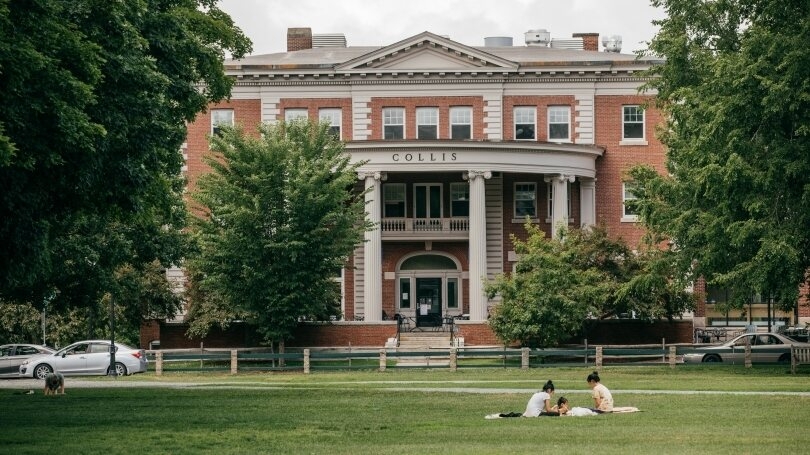
Collis couches and Novak tables topped with vanilla chai, I grew up. There in
the middle of no where New Hampshire, I found my own kind of sun — in the
brilliant Fall leaves, in the glittery February snow flakes, in the fat cooling
rain drops, and warm summer breezes.
This middle of nowhere New Hampshire became
the somewhere that changed my life.
Never stop dreaming and never stop reaching. This is the legacy that we have
received, and it will be the legacy that we pass on. It comes back to where I
began. Your work and the efforts of thousands of volunteers who share a
dream and a vision, who take on responsibility, who care, this is what keeps
the dream alive.
Thank you for all that you do for Dartmouth.
|