![]() |
|
About CISM at Dartmouth
|
|
CISM (Center for Integrated Space Weather Modeling) is an NSF-supported Science and Technology Center (STC). The Center is headed by Boston University Center for Space Physics, under Director Professor W.J. Hughes. The aim of this multi-institutional program is to develope an accurate model of the space weather system including the sun, the interplanetary solar wind, and the earth. This model will be used to further our understanding of the complex space environment, to predict solar weather events that might be harmful to human activities and technologies, and as an educational tool.
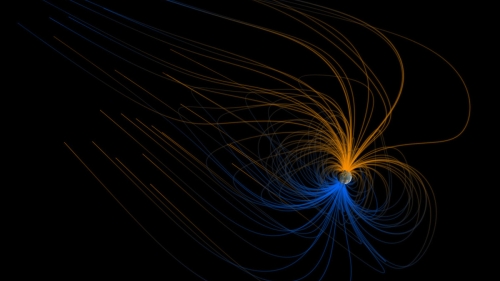
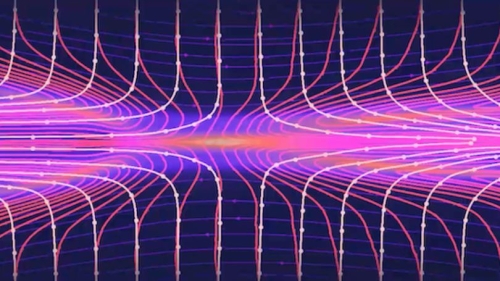
The earth's magnetosphere is the region near the earth where its magnetic field forms a protective bubble which impedes the transfer of energy and momentum from the solar wind plasma; the stronger the driving conditions - greater solar wind velocity for example - the more efficient is the transfer. A number of solar weather phenomena occur in the magnetosphere, including substorms and storms. The Van Allen Radiation Belts consist of omnipresent energetic electrons and protons trapped in the earth's magnetic field, although their flux and energy are highly variable. The earth's ionosphere is the upper layer of the atmosphere that is partially ionized by solar x-rays and UV radiation. Dartmouth's research is focused on the earth's magnetosphere and the related aspects of space weather. Specifically, we aim to develop a computational module representing the Earth's magnetosphere, including the inner plasma sheet, ring current, and Birkeland, or magnetic field aligned, currents. This module will be based on the Lyon-Fedder-Mobarry 3D Magnetospheric code, but will be designed to connect to the Rice Convection Model in the inner magnetosphere and also the Thermosphere-Ionosphere Nested Grid (TING) version of the NCAR TIMED-GCM model of the ionosphere and thermosphere. The module will accept as inputs time-dependent magnetic field and plasma densities and temperatures at the outer boundary. The RCM will compute the distribution functions of plasma within its domain and feed the information back to the global MHD model. Likewise, TING will provide an ionospheric boundary condition for the LFM code. The LFM code, modified by the RCM, will also compute the magnetic field-aligned currents into the ionosphere.
|
| [About] [Science] [News] [Gallery] [Publications] [People] [Links] [Plan] [Home] |