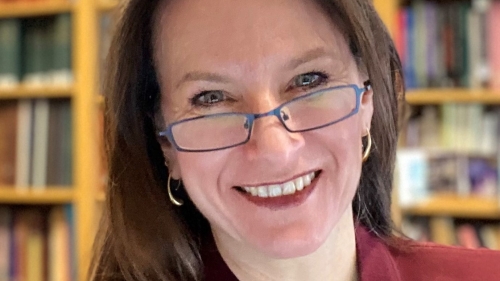
UNKEPT WOMEN: Elite Prostitution in Eighteenth-Century Paris
Lecture by NINA KUSHNER D'90, Assistant Professor of History, Clark University
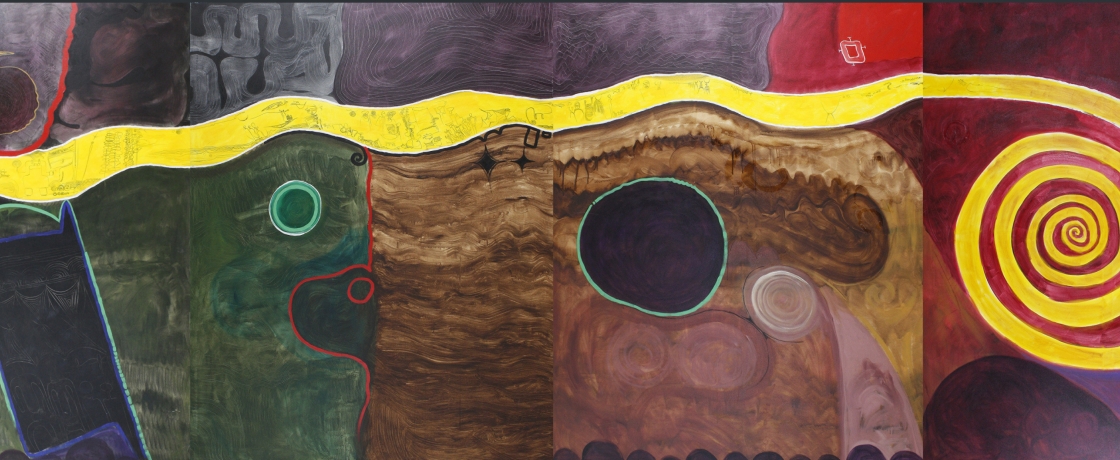
TOPPLING KUCHUM, CROSSING A CONTINENT: Russia's Conquest of Siberia and Expansion Across Eurasia
Lecture by Erika Monahan D'96, Assistant Professor of History, University of New Mexico
| THE CHRONICLE |
|---|
Two former History majors win FulbrightsBenjamin Kahn ’11 Ethan Mefford ’08
A Summer Term course recently added:HIST 44: Medieval France, 400-1494 (10 hr), taught by Lester Little D'57, Dwight W. Morrow Professor Emeritus of Smith College and Visiting Professor of History for Summer Term 2013 Starting with the topography and climate of the land that eventually became France, we will study the civilization of the Gauls, the Roman conquest of Gaul, and then the takeover of Roman Gaul by various Germanic peoples, chief among them the Franks. Next will come a second Roman conquest, carried out not by Roman soldiers but by Christian missionaries, and with far longer-lasting consequences. What follows will be the Frankish kingdom; Charlemagne's revival of the Roman Empire; attacks by new peoples from the North, East, and South: the splintering of political order and virtual collapse of the judicial process; and at last the re-establishment of order in part by directing the energies of the warrior class against external enemies (Moslems in Spain and Palestine). We turn then to the agricultural, demographic, and commercial/urban take-offs, with their major accomplishments in food production, cloth-making, banking, architecture, sculpture, theology and statecraft. The 14th century brought severe climate change, famine, plague, war, and popular revolts, but by 1500, thanks in some measure to Joan of Arc, the French kingdom and the loyalty of its subjects were stronger than those found anywhere else in Europe. This Summer will be the second time Professor Little (brief interview) has taught at Dartmouth. In Spring Term 2009 he taught COCO 6: Bubonic Plague: Past, Present, and Potential, a course that was tremendously successful. For more information about Professor Little, click here.
A Sampling of Fall Term 2013 History Courses:NEW — HIST 6: WHAT IS HISTORY (10A hr.)The discipline of History is about much more than names, dates, and events. It is actually a realm of robust argument, changing interpretations, and vivid imagination. This brand-new, team-taught course explores different genres of professional historical research and writing (e.g. biography, political history, cultural history). Through a dynamic mix of lectures and small-group discussions, both History majors and non-majors will gain a new appreciation of the historian’s craft. No prerequisites; first-year students welcome. Instructors: Professors L. Butler and E. Miller.
HIST 8: BODY PARTS, BODY WHOLES: AN INTRODUCTION TO THE COMPARATIVE HISTORY OF MEDICINE (10 hr.) This course examines the possibilities and problems of comparing medicine across time and region. We will begin by considering divergent conceptions of body in Chinese and Greek antiquity before moving on to the transformation of the healing traditions and the advance of modern biomedicine since 1800. Instead of imposing “holism” or “reductionism” on medical traditions, this course encourages students to view past expressions of medicine as a means of analyzing our own self here and now. Professor S. Suh. HIST 11: THE AGE OF THE AMERICAN REVOLUTION (2 hr.)This course begins with an examination of relations between England and its American Colonies in the middle of the eighteenth century. It deals with the collapse of British authority in America, emphasizing the social and intellectual sources of rebellion. Treatment of the war years focuses more on the problem of political and economic adjustment than on military history. The final topic covered is the adoption of a federal Constitution. Instructor: Professor P. Musselwhite. HIST 83: TWENTIETH CENTURY LATIN AMERICA (11 hr.) This course seeks to address major issues in twentieth century Latin America through the history of three or four countries. Topics discussed will include development, imperialism, nationalism, revolution, state formation and violence. Instructor: Professor T. Padilla. HIST 96.2: Colloquium: Introduction to Global Methods (3A hr.) Since ancient times historians have used the concept and structure of the story to shape our understanding of the past. But global or world historians seek to transcend the problems of story structure, and subjective points of view, but exploring additional methods of building objective, universal, narratives. This colloquium explores tools contributed by history, sociology, economics, archeology, astronomy, epidemiology, area studies, and cultural studies to examine the controversies that comparative and global historians have tackled. Not open to first-year students. Major Distrib: INTER. Instructor: Professor P. Crossley.
Two History Majors Research Korea's Favorite AmericanJun Bum Sun '14 and Karl Schutz '14 were intrigued by Homer Hulbert, Class of 1884, an American who fought for Korean independence. Growing up in South Korea, Jun Bum Sun had heard of an American activist who'd advocated for Korean independence. But it wasn't until he arrived in Hanover that he felt a connection to the man known as "Korea's favorite American." I'd read about him in history textbooks," he says. "But I had no idea he was a Dartmouth alumnus." The activist was Homer Hulbert of the Class of 1884. After arriving on campus, Jun learned that Hulbert went to Dartmouth. . . . Hulbert became a figure of fascination for Jun, as well as his friend and roommate, Karl Schutz. The two history majors worked as interns last year for the Homer Hulbert Memorial Society in Seoul, South Korea. Now, Jun and Schutz want to help spread Hulbert's story throughout Korea and across campus." Read the whole story at http://now.dartmouth.edu/2013/03/students-study-alumnus-known-as-koreas-favorite-american/.
New Faculty PublicationsEDWARD MILLER, Misalliance: Ngo Dinh Diem, the United States, and the Fate of South Vietnam (Harvard University Press, forthcoming April 2013) "In the annals of Vietnam War history, no figure has been more controversial than Ngo Dinh Diem. During the 1950s, U.S. leaders hailed Diem as 'the miracle man of Southeast Asia' and funneled huge amounts of aid to his South Vietnamese government. But in 1963 Diem was ousted and assassinated in a coup endorsed by President John F. Kennedy. Diem's alliance with Washington has long been as a Cold War relationship gone bad, undone either by American arrogance or by Diem's stubbornness. In Misalliance, Edward Miller provides a convincing new explanation for Diem's downfall and the larger tragedy of South Vietnam. For Diem and U.S. leaders, Miller argues, the alliance was more than just a joint effort to contain communism. It was also a means for each side to pursue its plans for nation building in South Vietnam. Miller's definitive portrait of Diem—based on extensive research in Vietnamese, French, and American archives—demonstrates that the South Vietnamese leader was neither Washington's pawn nor a tradition-bound mandarin. Rather, he was a shrewd and ruthless operator with his own vision for Vietnam's modernization. In 1963, allied clashes over development and reform, combined with rising internal resistance to Diem's nation building programs, fractured the alliance and changed the course of the Vietnam War. In depicting the rise and fall of the U.S.-Diem partnership, Misalliance shows how America's fate in Vietnam was written not only on the battlefield but also in Washington's dealings with its Vietnamese allies." JAMES WRIGHT, Those Who Have Borne the Battle: A History of America's Wars and Those Who Fought Them (Public Affairs, a member of Perseus Books, 2012)
"At the heart of the story of America's wars are our "citizen soldiers"—those hometown heroes who fought and sacrificed from Bunker Hill in Charlestown to Pointe du Hoc in Normandy, and beyond, without expectation of recognition or recompense. Americans like to think that the service of its citizen volunteers is, and always has been, of momentous importance in our politics and society. But though this has made for good storytelling, the reality of America's relationship to its veterans is far more complex. In Those Who Have Borne the Battle, historian and marine veteran James Wright tells the story of the long, often troubled relationship between America and those who have defended her from the Revolutionary War to today shedding new light both on our history and on the issues our country and its armed forces face today." BRUCE NELSON, Irish Nationalists and the Making of the Irish Race (Princeton University Press, 2012).
"This book is a book about Irish nationalism and how Irish nationalists developed their own conception of the Irish race. Bruce Nelson begins with an exploration of the discourse of race—from the nineteenth-century belief that "race is everything" to the more recent argument that there are no races. He focuses on how English observers constructed the "native" and Catholic Irish as uncivilized and savage, and on the racialization of the Irish in the nineteenth century, especially in Britain and the United States, where Irish immigrants were often portrayed in terms that had been applied mainly to enslaved Africans and their descendants. Most of the book focuses on how the Irish created their own identity—in the context of slavery and abolition, empire, and revolution. Since the Irish were a dispersed people, this process unfolded not only in Ireland, but in the United States, Britain, Australia, South Africa, and other countries. . . ." DOUGLAS HAYNES, Small Town Capitalism in Western India: Artisans, Merchants and the Making of the Informal Economy, 1870-1960 (Cambridge University Press, 2012). Received the John F. Richards Prize in South Asian History for the most distinguished work of scholarship on South Asian history published in English during 2012.
"This book charts the history of artisan production and marketing in the Bombay Presidency from 1870 to 1960. Although the textile mills of western India's biggest cities have been the subject of many rich studies, the role of artisan producers located in the region's small towns has been virtually ignored. Based on extensive archival research as well as numerous interviews with participants in the handloom and powerloom industries, this book explores the role of weavers, merchants, consumers, and labourers in the making of what the author calls 'small town capitalism.' By focusing on the politics of negotiation and resistance in local workshops, the book challenges conventional narratives of industrial change. . . ." M. CECILIA GAPOSCHKIN, Blessed Louis: The Most Glorious of Kings (University of Notre Dame Press, Fall 2012).
"Saint Louis, King of France from 1226 to 1270, is among the most important figures of medieval history. This volume brings together five unknown texts dating from after Louis' canonization in 1297: two lives, the most popular liturgical office, and two early sermons. Four of these texts are edited here for the first time, and none has ever before been translated from the Latin." ANNELISE ORLECK, The War on Poverty (University of Georgia Press, 2012).
"Makes an extremely significant intervention into several literatures—on social movements, on domestic policy, and on local government and power structures. It shares both a strong point of view and a clear commitment not to oversimplify or romanticize the grassroots activism it depicts, and this combination makes it convincing and, at times, gripping. The fact that the book treats civil rights activism among Mexican Americans, Indians, and Asian Americans is particularly attractive."—Linda Gordon, winner of the Bancroft Prize for Dorothea Lange: A Life Beyond Limits" COLIN CALLOWAY, LEDGER NARRATIVES: The Plains Indian Drawings of the Lansburgh Collection at Dartmouth College (University of Oklahoma Press, 2012).
"During the latter part of the nineteenth century, Plains Indian men meticulously recorded their battle and hunting exploits, courting scenes, and other cultural events, and these images provide an important insight into the world of the Native warrior-artist. Commonly known as 'ledger drawings,' these artworks were created on lined and unlined paper that was originally bound into sketchbooks or account books. Mostly executed in pencil, they were created in a graphically bold style that shows little or no background scenery but plenty of detail. They serve as a moving testament to the artistic creativity of Plains Indian artists." |