Mukul Sharma Current Research Interests in Isotope Geochemistry
- Near surface geochemistry of osmium
- Generation of oceanic lithosphere: the role of mantle heterogeneities
- Magma Differentiation and Source Characteristics of Continental Flood Basalts
- Early evolution of the earth: the terrestrial record of 146Sm
- Study on continental weathering using osmium isotopes
- Variations in Solar Magnetic Activity and the Sun-Climate Connection
- Tracing the source of groundwater arsenic in Bangladesh Delta
- Geochemical and isotopic studies of cosmic dust
- Near surface geochemistry of osmium
- Osmium and Iridium Transport through Estuarine Environments
Study on continental weathering using osmium isotopes
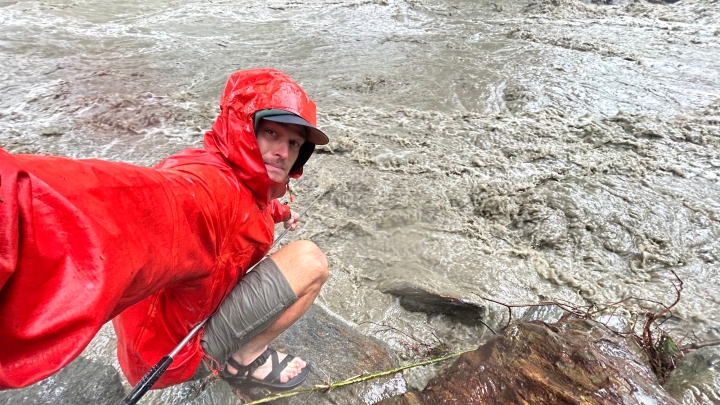
Continental weathering has been recognized as an important mechanism for global climate change because of its link with the concentration of atmospheric CO2. Seawater Os is derived from continental weathering, hydrothermal alteration of oceanic crust and from the dissolution of cosmic dust/micrometeorites. On average, 187Os/188Os ratio of ocean crust and cosmic material are nearly identical (~0.130) and about ten times lower than that of continental matter (~1.26). Therefore, past variations in marine osmium isotopic composition could potentially provide quantitative insights into (1) the changes in the paleo-weathering rates, (2) the variations in the cosmic dust flux to the earth, and (3) glacial-interglacial variations in the source areas of eolian dust. We are working on the following problems: (A) Osmium and Iridium transport through estuarine environment; (B) Osmium isotopes of the Arsenic-enriched groundwater of Bangladesh; (C) Behavior of Re, Os, and Pt during weathering and soil formation: coupled 187Re-187Os, 190Pt-186Os isotope systematics of laterites.