Classics Department ventures forth to Eclipse viewing in St. Johnsbury
Roughly 40 students, faculty and staff from Dartmouth's Classics department ventured forth to St. Johnsbury by bus and car to view the total Eclipse of the sun on April 8th 2024.
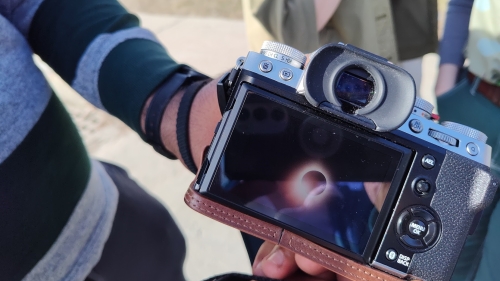

Roughly 40 students, faculty and staff from Dartmouth's Classics department ventured forth to St. Johnsbury by bus and car to view the total Eclipse of the sun on April 8th 2024.
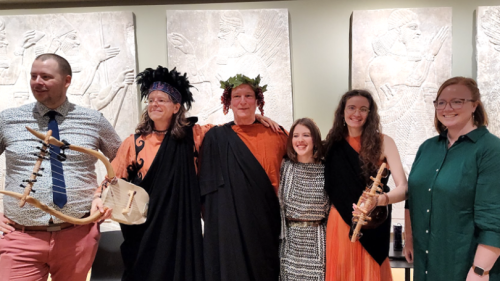
Many members of the Classics Department were in the Hood Museum on March 8, 2024 to see and hear a performance of music from Ancient Greece and Anatolia. The performers were John C. Franklin, Professor and Chair of Classics at the University of Vermont, and his four-piece group, The Call of Kinnaru.
May 2nd 2024, 4:30pm. Victoria Pagán will give a lecture entitled: "Conspiracy and Conspiracy Theory, Ancient and Modern". Victoria Pagán is Professor of Classics at the University of Florida, USA. She is the editor of A Companion to Tacitus and the author of Conspiracy Narratives in Roman History, Conspiracy Theory in Latin Literature, Rome and the Literature of Gardens, and Tacitus.
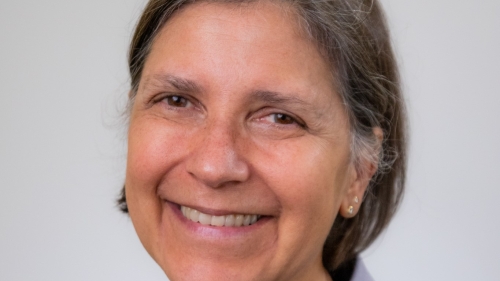
Alexandra Schultz, Assistant Professor of Classics, is one of the talented cohort of new professors that has joined the Dartmouth faculty this year, breaking new ground in labs and classrooms across campus.

The Department of Classics is delighted to welcome you to Dartmouth! This page lets you know about some of the opportunities that will be open to you here for studying Latin or Greek, ancient history, mythology, archaeology, ancient philosophy and related subjects.
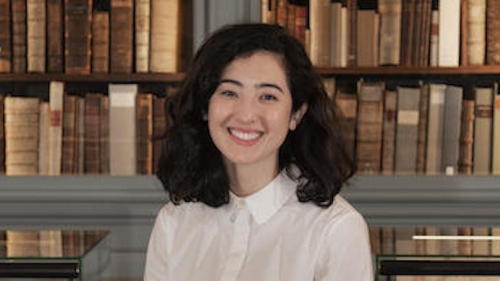
Alexandra Schultz has joined the Classics Department as Assistant Professor. Her office is Reed Hall, room 316. We welcome her to the Classics Department. Winter 2024 she will be teaching GRK 1 and LAT 32.
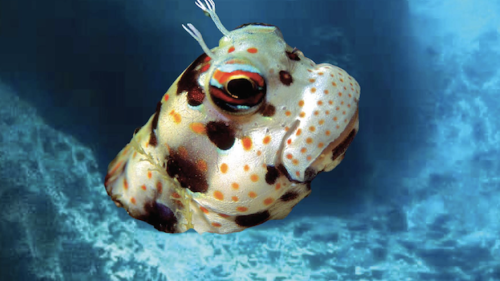
Andrew Feldherr, Princeton University was this years Zarbin lecturer. His lecture was Ovid's Undersea World, In his Natural History, Pliny uses an Ovidian poem on fishing as a source for describing the wondrous creatures of the sea. This paper used that passage to shape a reading of Metamorphoses.
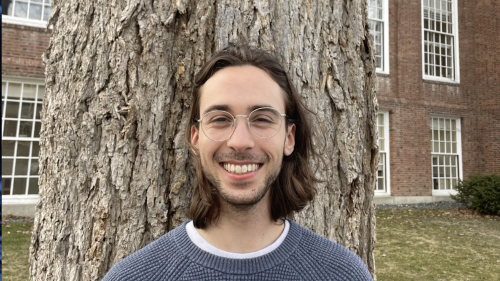
Congratulations to Will Dowling '23, who has won the 2023 Anthony Fauci Award in Classics and STEM!
The Department warmly congratulates a fantastic group of students who will graduate from Dartmouth this year with majors or minors in Classical Studies, Classical Archaeology, and Classical Languages and Literature. Your dedication and your commitment to the liberal arts has brought you to this milestone in your life.

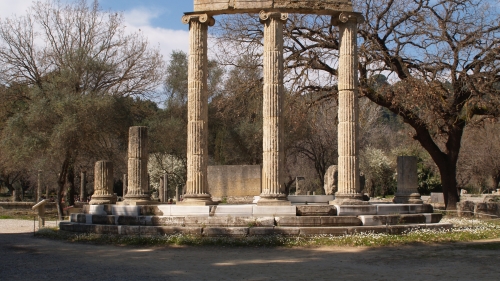
Olympia, competing and feasting in the sanctuary of Zeus, Reinhard Senff, Director of the DAI, this year's Benefactors' Lecturer on May 4, 2023.