|
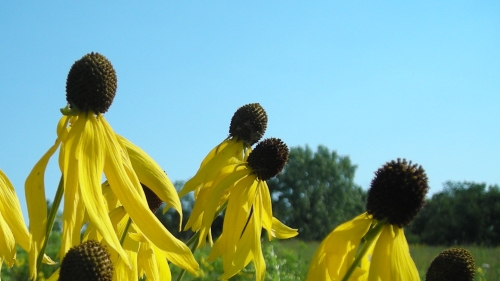
Few academic institutions can rival our ready access to diverse natural
habitats. The glaciated terrain of New Hampshire and Vermont offers innumerable
small, clear streams, ponds, bogs, and vernal pools. These waters, including
even the Connecticut River that marks the west limit of the campus, are only
superficially explored. The northern boreal forests and the more southern
deciduous forest overlap in our area, and alpine tundra exists in the mountains
only an hour away. We can reach representative communities from all these
environments on routine field trips. Classes are taken to marine tide pools and
salt marshes at the coast in a single day.
Dartmouth's biologists currently conduct research in a number of sites with
permanent research facilities, including sites in New England and the new and
old world tropics. Several areas owned by the college are available for
research, including the
College Grant, a 26,000 acre tract in northern New Hampshire with two
rivers. Mt. Moosilauke
is a Dartmouth-owned property less than an hour from Hanover. This mountain has
been the site of Dartmouth research in forest ecology since the late 1960's.
Since 1985 Mt. Moosilauke has been one of the primary US Forest Service and EPA sites for the study of atmospheric
deposition on forest vegetation.
Graduate students conduct research in many different ecosystems around the
world. Many students conduct research within the expansive forests, streams,
and lakes of New England, including the famous Hubbard Brook Experimental Forest in
the White Mountains of New Hampshire. Various other graduate research projects
involve studies at the Rocky
Mountain Biological Station in Colorado, within the coastal sage scrub
systems of southern California, in tropical rainforests and African savannahs,
and in pine forests of the southern U.S. and Mexico.
The Department of Biological Sciences Facilities
The Department of Biological Sciences has spaces for growing a wide variety
of organisms, including a separate National Institutes of Health-approved
Animal Care Facility for the maintenance of warm-blooded animals that is
located in the adjoining medical school research building. The department has
numerous pieces of shared equipment from a DNA sequencer to
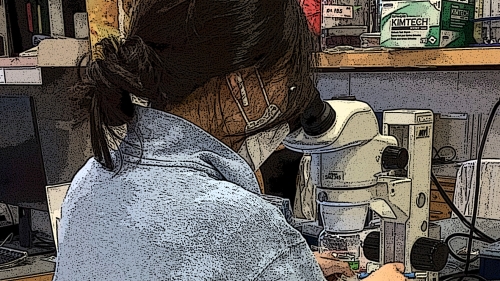
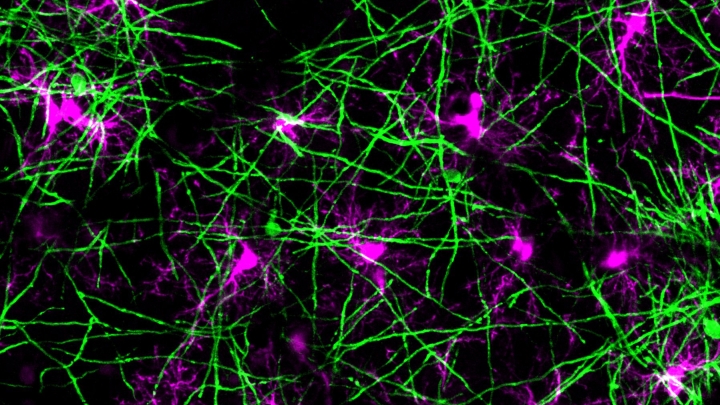
ultra-centrifuges. The light microscope facilities house two confocal
microscope systems, a PALM system, fluorescence compound and stereo
microscopes. Our department also houses a EM facility with transmission
and scanning electron microscopes.
The Dana Library
The Dana Biomedical Library in Hanover on the College campus is one of two
Biomedical Libraries at
Dartmouth. The other is the Matthews-Fuller Health Sciences Library at the
Dartmouth-Hitchcock Medical Center in Lebanon.
The mission of the Biomedical Libraries is to identify, develop, and provide
resources and services that are responsive to the biological and medical
information needs of the College, Dartmouth Medical School, and the
Dartmouth-Hitchcock Medical Center. The combined collections comprise the
largest biomedical library in Northern New England and contain nearly 300,000
physical volumes. Current subscriptions number about 2,500, including access to
about 1,800 digital journals. The Biomedical Libraries Web provides information
about services and resources, including links to MEDLINE, Web of Science,
BIOSIS, several biotechnical databases, and more.
The Biomedical Libraries are a component of the Dartmouth College Library system.
Several other libraries in the system have important collections for Ecology
and Evolutionary Biology, including the Baker/Berry Library, the Kresge Physical Sciences Library,
and the Feldberg Business and
Engineering Library.
Dartmouth Medical School
The present laboratory and classroom facilities in the Remsen and Vail
buildings cover 187,000 square feet of floor space on seven levels. Arcades at
the third level link them to the Gilman laboratories and to the Kellogg
Auditorium. There are several Dartmouth Medical School
departments with whom students may collaborate. Specialized instruments
required in the Molecular Biology
Core Facility.
Kiewit Computer Center
The Kiewit Computer Center supports a variety of mainframe computers and
operating systems, providing outstanding facilities for data-storage,
programming and computer analysis. The Kiewit Network connects central
computers and workstations on campus, allowing easy access to the public file
server that contains courseware, public domain and site-licensed software, and
shared files.
|