You may be using a Web browser that does not support standards for accessibility and user interaction. Find out why you should upgrade your browser for a better experience of this and other standards-based sites...

Dartmouth Home  Search  Index

Dartmouth HomeSearchIndex

Dartmouth home page

Anthropology Department

Anthropology Department

Department of Anthropology

6047 Silsby Hall
Dartmouth College
Hanover, NH 03755

(603) 646-3256
Fax: (603) 646-1140

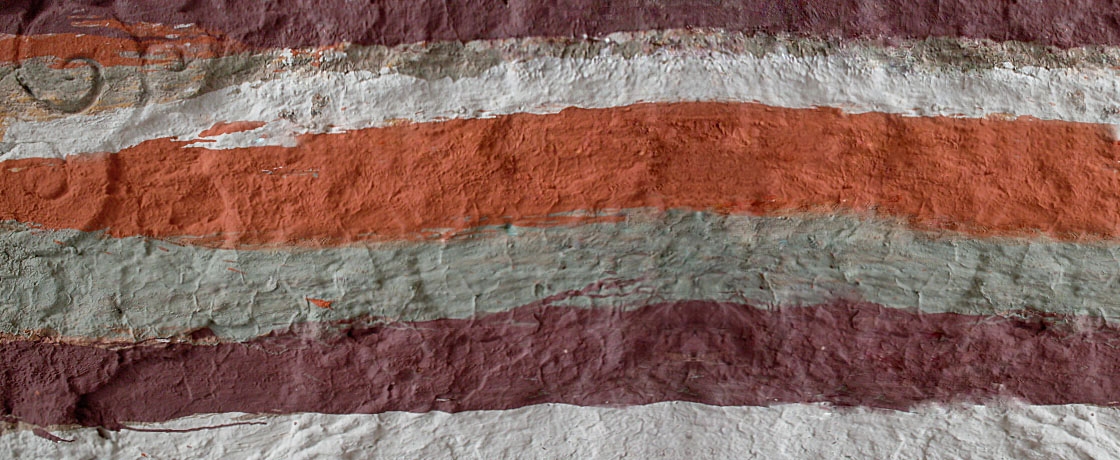
Feather Hair Pieces
Photo: Christopher Ball

News Bulletins:

Faculty News:


Hot from the Press: Crossing Boundaries: Gender, the Public, and the Private in Contemporary Muslim Societies, edited by Kazuo Ohtsuka and Dale F. Eickelman (Tokyo: Research Institute for Languages and Cultures of Asia and Africa, 2008).

"Public" and "private" are concepts as basic to social thought as male and female, political and domestic, and sacred and profane. This book explores the utility of public and private as this dichotomy, formulated primarily in the European tradition of social thought, has been used by Japanese and American scholars in understanding gender issues and new communications media in the Muslim majority societies of the Middle East and Southeast Asia.


Sienna Craig: Horses Like Lightning

Review by the Santa Barbara Independent, July 17, 2008

"Many scholars have opened Himalayan cultures up to us with authority and learning, but few have traveled with the open heart and transparent sincerity of Sienna Craig. Horses Like Lightning is a singular dance of innocence and experience."

— Pico Iyer, author of The Open Road: The Global Journey of the Fourteenth Dalai Lama

At just 19, Sienna Craig made her first venture to Mustang, an ethnically Tibetan area of Nepal, in the rainshadow of the Himalayas. As an equestrian and a student of anthropology, she sought not only to understand what it was like to rely on horses to navigate through the windswept valleys and plains of High Asia, but also to grasp how horses lent meaning – through myth, ritual, and metaphor – to the lives of Mustang's people. Through living and working with local Tibetan medical doctors, veterinarians, and other horse experts, as well as the deep friendships she formed, Sienna began to understand the region’s history, and to witness how life in Mustang was being transformed in the face of social, political, and economic transitions. She also endeavored to learn about herself, and her life’s course, through her year in Mustang – a place that came to feel, for all its foreignness, like home.

Horses Like Lightning


Social Violence Deborah L. Nichols and Patricia L. Crown, eds: Social Violence in Prehispanic American Southwest

Spontaneous acts of violence born of human emotions like anger or greed are probably universal, but social violence - violence resulting from social relationships within and between groups of people - is a much more complex issue with implications beyond archaeology. Recent research has generated multiple interpretations about the forms, intensity, and underlying causes of social violence in the ancient Southwest. This volume looks at archaeological interpretations, multidisciplinary approaches, and the implications of archaeological research for Native peoples and how they are impacted by what archaeologists say about their past. Specific chapters address the impacts of raiding and warfare, the possible origins of ritual violence, the evidence for social violence manifested in human skeletal remains, the implications of witchcraft persecution, and an examination of the reasons behind apparent anthropophagy. There is little question that social violence occurred in the American Southwest. These contributions support the need for further discussion and investigation into its causes and the broader implications for archaeology and anthropology


Kirk Endicott and Robert Welsch, eds., “Taking Sides: Clashing Views in Anthropology,” 4th ed. (McGraw Hill, 2009).

This is a debate-style reader designed to introduce students to current controversies in major subfields of anthropology, including biological anthropology, archaeology, linguistic anthropology, cultural anthropology, and ethics in anthropology. Each of the 19 issues includes an introduction and postscript by the editors and two articles by leading scholars arguing opposites positions on the issue. Questions include: “Are Humans Inherently Violent?,” “Can Apes Learn Language?,” and “Is Gay Marriage Natural?” The reader is designed to teach students how to critically analyze scholarly arguments and develop informed opinions on important issues in anthropology.

Taking Sides
The Headman was a Woman


Kirk M. Endicott and Karen L. Endicott, "The Headman Was a Woman: The Gender Egalitarian Batek of Malaysia" (Waveland, 2008).

A comprehensive ethnography of one of the few remaining hunting and gathering peoples of Southeast Asia, The Headman Was a Woman presents the gender concepts, roles and relations of the highly egalitarian Batek of Peninsular Malaysia. Based on longtime field-work, the book describes the lives of Batek men and women in the tropical rainforest, and includes discussions of fieldwork, hunting and gathering, social organization, religion, gender, nonviolence, and cultural persistence in the face of a changing landscape.

The ethnography is accompanied by a 37-minute DVD, The Batek: Rainforest Foragers of Kelantan, Malaysia. Footage shows vidid highlights of camp life and social activities as well as all of the important economic processes described in the book.

The Dartmouth: 2/29/2008 and Dartmouth News 2/26/2008


Students News:

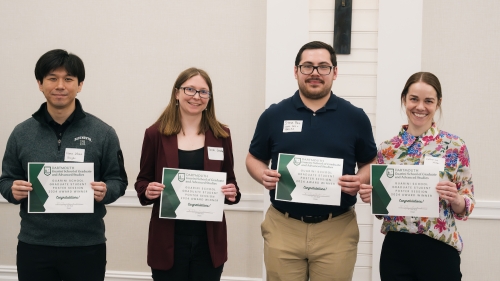
Five Dartmouth Students and Four Dartmouth Faculty Attended the 48th Annual Meetings of the Northeast Anthropological Association, on March 7-9, 2008.

Dartmouth College was well represented at the meetings of the Northeast Anthropological Association held this past weekend at the University of Massachusetts at Amherst. One of our students, Megan Paradise ’08, won the John Omohundro Undergraduate Student Paper Prize for her paper entitled “Social Constructions of ‘Quality’ in Subsistence Agriculture and Food Production: A Case Study from Himachal Pradesh, India.” This is the third undergraduate paper prize Dartmouth anthropology students have won in as many years from the NEAA.
Four other students gave papers: Adam M. Levine ’08, presented “Mapping Socio-Cultural Evolution: Multilinearity Revisited.” Zaneta Thayer ’08 presented a paper she had coauthored with her advisor, Assistant Professor Seth Dobson entitled “On the Adaptive Value of the Chin from the Perspective of Sexual Dimorphism.” Zachary Kaufman presented his paper “Evaluating an Adolescent-Targeted HIV Prevention Program in the Dominican Republic,” and Joseph Ornstein ’09 presented a paper he had co-authored with Visiting Professor of Anthropology Robert L. Welsch, “Friendship on the North Coast of Papua New Guinea.”
Two of the Department of Anthropology’s newest faculty members organized provocative and interesting sessions in Biological anthropology. Kathleen Muldoon, Assistant Professor of Anatomy and Adjunct Assistant Professor of Anthropology, organized and chaired a panel entitled “Body of Evidence: New Directions in Evolutionary Morphology,” in which Assistant Professor Seth Dobson presented his paper “Allometry of Facial Mobility in anthropoid Primates: Implications for the Evolution of Facial Expression.” Dobson also served as a discussant on the panel and led an interesting discussion among the many students and faculty present. Muldoon also helped organize a panel on “Madagascar’s Lemurs: Surviving on an Island of Change” at which she presented her paper (co-authored by S. M. Goodman of The Field Museum), “Patterns of Ecological Diversity in Modern Small Mammal Communities of Madagascar.”
Christopher Ball, McKennan Postdoctoral Fellow in the Department of Anthropology, presented a fascinating and provocative paper “Upper Xinguans are Rock Stars: The Pragmatics of Complaint in Indigenous Amazonian Development Projects.” This paper was presented in a panel called “Beyond Development: Socioeconomic Policies from a Grassroots Perspective” and led to a spirited discussion afterward.
In recent years, Dartmouth students and faculty have regularly attended the NEAA meetings since 2003. In 2004, Welsch organized the meetings at Dartmouth, which was cosponsored by the Department of Anthropology, the Dickey Center for International Understanding, the Rockefeller Center, the Hood Museum, and Native American Studies Program.

Adam Levine '08 has been selected as a Rhodes Scholar for 2008

Adam M. Levine, Bronx, New York, is a senior at Dartmouth College where he triple majors in anthropology, art history, and mathematics and social science. His undergraduate thesis in art history is an examination of canonical images of Christ. He is interested in the application of mathematical network analysis to art, historical and anthropological studies. He is also a light heavyweight boxer. Adam plans to do a D.Phil. in classics at Oxford.

47th Annual Meeting of the Northeast Anthropological Association, 2007

JacobJacob Appelbaum's '07 paper "Natural Disasters in the Pacific: Ongoing Problems and Unique Responses" won the John Omohundro Undergraduate Paper Prize at the 47th annual meeting of the Northeastern Anthropological Association in Itahaca, New York. Jacob's paper focused on the many problems of disaster planning and response in the Pacific. He used the results of his own ethnographic fieldwork on Nukunonu, Tokelau to provide an example of successful strategies for preparing for and responding to natural disasters.


Chair

Deborah Nichols
deborah.l.nichols@dartmouth.edu

Administrator

Thérèse Périn-Deville
therese.perin-deville@dartmouth.edu


Last Updated: 7/30/08