Biological

6. Introduction to Biological Anthropology

05F, 06F: 11

The major themes of biological anthropology will be introduced; these include the evolution of the primates, the evolution of the human species, and the diversification and adaptation of modern human populations. Emphasis will be given to (1) the underlying evolutionary framework, and (2) the complex interaction between human biological and cultural existences and the environment. (BIOL) Dist: SCI. Korey.

41. Hominid Evolution

07W: 2A

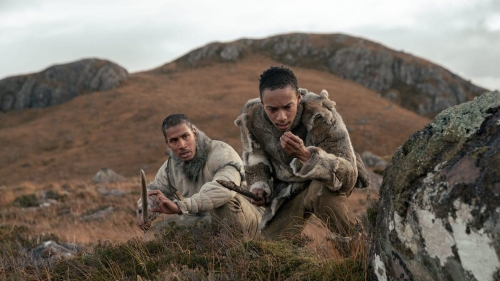
This course examines human evolution primarily from the perspectives of paleontology and archaeology. It emphasis contemporary attempts to reconstruct the hominid past by drawing variously upon morphological, ecological, and cultural considerations. Attention is also given to the patterns of biomolecular variation illuminating the origin of the human lineage and on the subsequent appearance of the modern species.

Prerequisite: Anthropology 6 or permission of the instructor. (BIOL) Dist: SCI. Korey.

42. Biological Diversity in Modern Populations

06W, 07W:  10A

The processes and factors shaping the biological variability of the living human species are examined in this course. The adaptive and historical connections between human biology, culture, and environment are explored mainly from the perspective of human population genetics, whose principles are developed in formal terms. Topics include the distribution and organization of genetic diversity, the influences of natural and cultural selection on the human genome, and the patterning of traits of complex and multifactorial inheritance. While knowledge of calculus is not a prerequisite, some mathematical preparation is highly recommended.

Prerequisite: Anthropology 6 or permission of the instructor. (BIOL) Dist: SCI. Korey.

43. Human Osteology

05F, 06F: 2

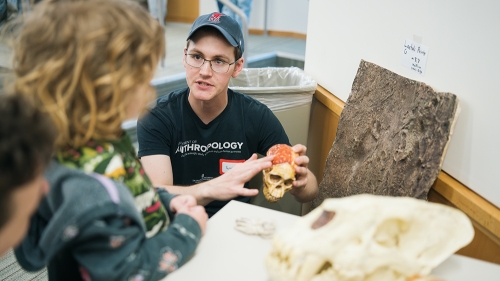
This course is concerned with analysis of skeletal remains of earlier human populations. Topics include bone morphology, principles of bone growth and remodelling, biomechanical aspects of bone structure, analysis of variation within and between populations, paleopathology, and paleodemography. Practical techniques, emphasizing fragment identification, aging, and sexing, are intensively developed in regular laboratory sessions and are central to the course. Prerequisite: Anthropology 6 or permission of the instructor. (BIOL) Dist: SLA. Korey.

78. Genes, Culture and Behavior: A Sociology of Science

06W: 2A

This is an interdisciplinary culminating seminar for senior anthropology majors; it also fulfills the department's requirement for a course in biological anthropology. The central theme of the seminar concerns the framing of the modern discourse on human genetics and evolution in light of extra-scientific attitudes and commitments—primarily ideological. Topics will include the eugenics movement and geneticists' attitudes about race before World War II, reconstitution of physical anthropology in the postwar period, civil rights and feminism as precipitants of scientific revisionism, and contemporary debates on the significance of the genes as determinants of behaviors notably associated with race, sex, and sexual orientation. (BIOL) Dist: SOC; WCult: CI Korey.

Last Updated: 9/3/08