African and African-American Studies
Choate House, HB 6134
34 North Main Street
Hanover, NH 03755
(603) 646-3397
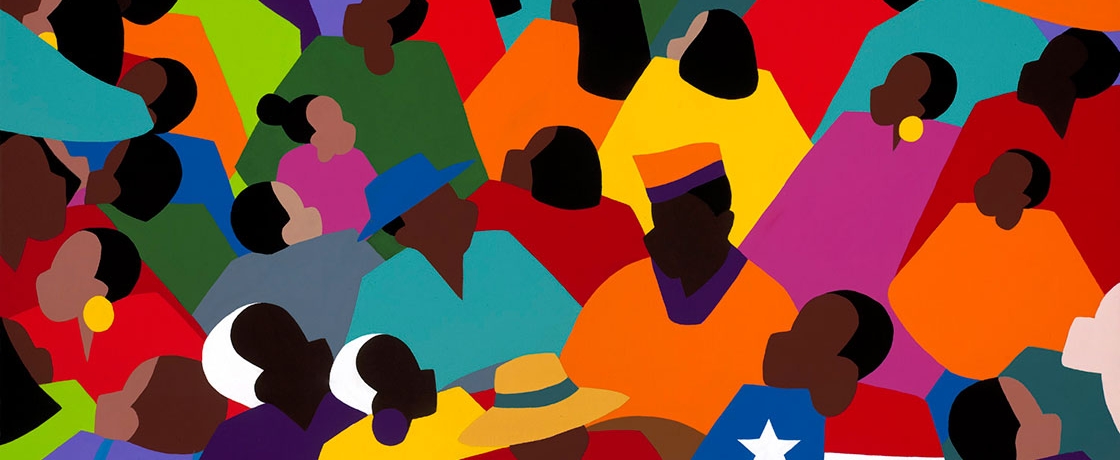
About the Banner:
The “Life of Malcolm X” murals were painted by Florian Jenkins in 1972. The eight panels depict the life and assassination of the human rights activist. The murals were sponsored by the Afro-American Society and are located in Cutter-Shabazz Hall.
AAAS 33: The African-American Intellectual
A cross-disciplinary study of the contributions and problems of African American intellectuals in the U.S. We will focus primarily on 20th century figures and scholarship to understand works by such thinkers as W.E.B. DuBois, Alain Locke, Zora Neale Hurston, Carter Woodson, Ralph Ellison, E. Franklin Frazier, James Baldwin, Angela Davis, Manning Marable, Derrick Bell, Cornel West, and Patricia Williams, as well as the social and intellectual contexts in which they found, and continue to find, themselves.
(12) Professor Favor. CI, SOC
AAAS 81.3: Slavery, Gender & Resistance (Identical to WGST 36.4)
This class will look at a variety of texts responding to transatlantic slavery, from Mary Prince's biographical narrative and Harriet Beecher Stowe's Uncle Tom's Cabin to contemporary writing to examine how (differences, commonalities?) white and black women writers have articulated slavery, and resistance against it. Required reading (primary texts): The History of Mary Prince: A West Indian Slave; Uncle Tom's Cabin; Toni Morrison's A Mercy; Elisabeth Kuti's The Sugar Wife; Saidya Hartman's Lose Your Mother; and Yvette Christianse's Unconfessed.
(10A) Professor Broeck.
AAAS 87: Black Citizenship in the Americas (Identical to LACS 62)
The abolition of slavery and the struggle for rights and citizenship among formerly enslaved peoples is a central part of the history of Latin America and the Caribbean as well as the U.S. In this course we will focus on the transition from slavery to freedom in the United States, Brazil, and Cuba as we read the works of the Afro-Brazilian writer Machado de Assis, the African American writer Charles W. Chesnutt and the Afro-Cuban poet Nicolás Guillén. We will explore the different ways each author represents issues of race and citizenship from abolition through the first decades of the post slavery period. By reading across national boundaries and bringing together history and literature, we will be able to examine how an African diasporic culture has developed across the Americas. Throughout the term we will explore theories of citizenship, cultural constructions of race and gender, issues of culture and diaspora, and the process of remembering and retelling the slave past. We will discuss the opportunities and limitations of comparative study of the Americas and how it might shape our understanding of the African diaspora.
(11) Professor Smolin. CI, LIT
AAAS 19: Africa and the World (Identical to HIST 5.8)
This course focuses on links between Africa and other parts of the world, in particular Europe and Asia. Readings, lectures, and discussions will address travel and migration, economics and trade, identity formation, empire, and cultural production. Rather than viewing Africa as separate from global processes, the course will address historical phenomena across oceans, deserts, cultures, and languages to demonstrate both the diversity of experiences and the long-term global connections among disparate parts of the world.
(2A) Professor Trumbull. NW, INT/SOC
AAAS 34: Early Black American Literature (Identical to ENGL 30)
A study of the foundations of Black American literature and thought, from the colonial period through the era of Booker T. Washington. The course will concentrate on the way in which developing Afro-American literature met the challenges posed successively by slavery, abolition, emancipation, and the struggle to determine directions for the twentieth century. Selections will include: Wheatley, Life and Works; Brown, Clotel; Douglass, Narrative; Washington, Up from Slavery; DuBois, Souls of Black Folk; Dunbar, Sport of the Gods; Chestnut, House Behind the Cedars; Harriet Wilson, Our Nig; Johnson, The Autobiography of an Ex-Coloured Man; and poems by F. W. Harper, Paul L. Dunbar and Ann Spencer.
(10) Professor Favor. W, LIT
AAAS 35: Modern Black American Literature (Identical to ENGL 33)
A study of African American literature from the Harlem Renaissance to the present, this course will focus on emerging and diverging traditions of writing by African Americans. We shall also investigate the changing forms and contexts of 'racial representation' in the United States. Works may include those by Hurston, Hughes, Wright, Ellison, Morrison, Schuyler, West, Murray, Gates, Parks.
(10A) Professor Colbert. W, LIT
AAAS 42: Women, Religion and Social Change in Africa (Identical to WGST 44.3)
This introductory, multidisciplinary course examines women's religions ideas, beliefs, concerns, actions, rituals and socio-cultural experiences in African societies and cultures from a comparative, historical and gender perspective. We will look at women's experiences of social change in African religions, the encounter with Islam, slavery, Christianity, and colonialism. We will analyze the articulations of economic and political power or lack of power in religious ideas as we ask questions such as: What are the different antecedents and circumstances in which women exercise or are denied agency, leadership, power and happiness in their communities? Texts will include nonfiction, fiction, and film narratives. Open to all students.
(10A) Professor Baum. NW
AAAS 52: History of North Africa from the arrival of Islam to the Present (Identical to HIST 68)
This course offers an introduction to the history of North Africa from its conversion to Islam to its current, transnational political and social formations. Focusing on religion and conversion, Sufism and mysticism, French and Italian colonialism, trade and economic history, environment, the region's engagement with the Sahara, literature and culture, and migration, assignments will emphasize major themes in the social, political, economic, and cultural history of the region. Open to all classes.
(10A) Professor Trumbull. NW, SOC
AAAS 64: U.S. Afro-Latino Literature (Identical to COLT 57, INTS 17, LATS 43)
This course examines literature written by U.S. citizens of African and Spanish- Caribbean ancestry. This growing group of writers represents new perspectives that are challenging while broadening the scope, definition and imaginary conception of "American literature," specifically in North America. Laden with neo-cartographies of the home-space, the works of writers such as Marta Vega, Loida Maritza Perez, and Nelly Rosario challenge institutionalized notions of space, place, location, home, nation, culture, citizenship and identity.
(Tues 3-6) Professor Tillis. W, INT/LIT
AAAS 80.3: Blacks in Hollywood Film
This class is designed to explore the development, treatment and promulgation of created visual images relative to the presentation and representation of blacks in Hollywood film from the genesis of feature-length film, roughly 1915, to filmic productions of the early 21st century. In so doing, the class will examine critically Hollywood's cinematic treatment of black people focusing on the following: patriarchal masculinity, black masculinity, black womanhood, and the black male/white female paradigm.
(Wed 3-6) Professor Tillis. CI, SOC
AAAS 83.5: African Religions of the Americas (Identical to REL 17)
This class introduces the history and practices of African-derived religious traditions as they have developed in the Caribbean, Latin America, and Black American communities in the United States. These religious systems will be discussed with reference to their mainstream representation (as "voodoo") and analyzed according to the more complex realities of their practitioners' everyday lives. Three themes to be explored in each tradition include 1) gender identity; 2) racial identity and resistance; and 3) aesthetics. Open to all classes.
(2) Professor Pérez. CI, INT/TMV
AAAS 88.5: Race, Power and Development in Haiti (Identical to ANTH 50.4, LACS 50.2)
Although often cast as marginal in Western thought, Haiti holds a central place in the history of the modern world. This course examines the tension between Haiti's worldly significance and current predicament by drawing on studies of Haiti within the anthropology of the "Black Atlantic," or African diaspora, and globalization studies. Students will acquire an historical understanding of Haitian society and culture and an enriched perspective on the country's social problems. Independent research is required.
(2A) Professor Kivland. CI, SOC
AAAS 90.4: Africa in the African-American Mind (Identical to HIST 96.4)
This upper-level seminar examines African-American political and cultural visions of Africa in the 19th and 20th centuries, emphasizing the themes of black nationalism, Pan Africanism and anticolonialism, as well as emigration, repatriation and exile. Attitudes toward Africa have profoundly shaped African-American identity and consciousness. The complexity of these views belie notions of simplistic or essential relationships between "black folk here and there," and invite critical contemplation of the roles Africa has played in the African-American imaginary.
(3A) Professor Rickford.
AAAS 89: Independent Study in African and African American Studies
Available to students who wish to independently explore aspects of African and African American Studies which are not included in courses currently offered at Dartmouth. Open to qualified students with permission of the course instructor and the Chair. (Obtain Proposal Form in the program office.) No student may take more than two such courses without the approval of the Chair. Open to sophomores, juniors and seniors.
AAAS 97: Senior Independent Research in African and African American Studies
For senior African and African American Studies majors toward the culminating experience, with permission of selected instructor and the Chair. (Obtain Proposal Form in the program office.)
AAAS 98-99: Honors Thesis in African and African American Studies, two terms of senior year with selected AAAS faculty member
The honors student will pursue the project under guidance of selected faculty member and with permission of the Chair. See "A Guide to Honors in African and African American Studies."