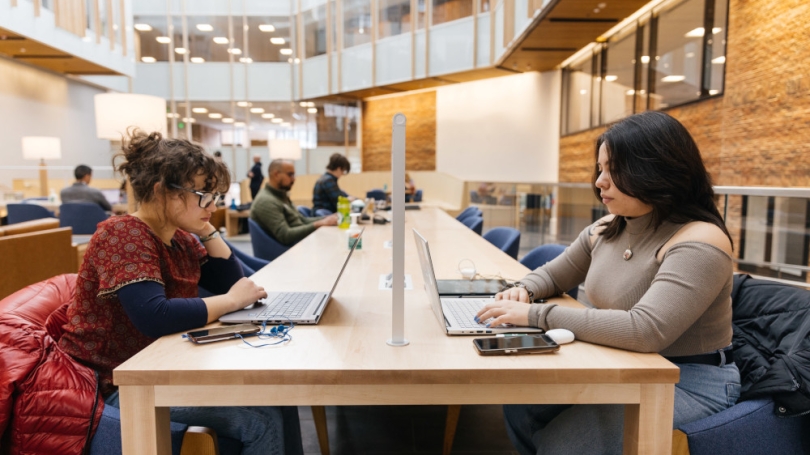
Those of us who teach the academic essay and its attendant critical thinking and research skills have long recognized that our students are engaging in increasingly diverse discourses, delivered to them by increasingly varied media. Our students typically don’t read newspapers; they don’t thumb through news magazines; they don’t watch the network news. Instead, they scan websites, from CNN to YouTube to Digg, where information is constructed via text, hypertext, video, and audio. Equally important to writing instructors is that students are writing with this new media, composing blogs, contributing to wikis, creating web pages, and crafting podcasts and videos.
So who are these tech-savvy students? And is their immersion in new technologies and new media benefiting their educational lives? In the following video, Michael Wesch offers a disturbing take on this question.
Among Wesch’s arguments in this video is the claim that students are not being well served in higher education, and that new technologies and new medias are in some ways further muddying an already muddied experience. With Wesch’s caution in mind, I’d like to offer a more positive view of the role that new media and new technologies can play in our writing clasrooms. If we educate our students about new technologies—if we give them the intellectual tools with which they can analyze new media and communicate effectively with them—our students’ experiences will differ markedly from the experiences that Wesch illustrates in his video.
Let’s see how this might be done.
New Media, New Literacies
First we must recognize that the skills that have traditionally been central to the liberal arts education—to read critically, to research thoroughly, to compose thesis-driven arguments—are no longer, all by themselves, sufficient. In order to meet its commitment to educating “complete” citizens, liberal arts institutions must give students not only the opportunity to read and write about ongoing scholarly questions, but also the opportunity to watch, critique, and respond to current events—events that are as-yet undigested by critics and scholars and so require students to make judgments about what they are seeing and hearing, often on the spot. These events are most often delivered to our students via new media.
Navigating new media requires new ways of reading—new literacies, if you will, including the visual and the technological. In “Made Not Only in Words: Composition in a New Key,”1 Kathleen Blake Yancy heralds these new literacies. Quoting Elizabeth Daley, Yancey writes:
“No longer…can students be considered truly educated by mastering reading and writing alone. The ability to negotiate through life by combining words with pictures with audio and video to express thoughts will be the mark of the educated student” (“Speaking the Language of Literacy”). Specifically…the literacy of the screen, which…parallels oral literacy and print literacy, [should] become a third literacy required of all undergraduates (Yancey 305).
In order to develop this increasingly necessary literacy, students must not only study new media, they must also compose with them. Hence the multimedia assignment in the writing classroom.
New Media, New Composition
New media have brought an array of challenges to the first-year writing instructor. New technologies have created a new kind of writer—one who writes increasingly often for self-determined rather than assigned purposes, and with a genre-specific voice. New technologies have created a new type of audience—one that regularly interacts with the author and with other readers through message boards, wikis, and blogs. And they have created several new genres—each allowing the writer to structure information and reach readers in a variety of ways. Indeed, as Yancey notes, new media are creating a new definition of writing, leading her to raise the question:
“What is writing? It includes print: that seems obvious. But: Does it include writing for the screen? How visual is it? Is it the ability to move textual resources among spaces, as suggested by Johndan Johnson-Eilola? Is composing, as James Porter suggests, not only about medium but also specifically about technology? Suppose I said that basically writing is interfacing? What does that add to our definition of writing? What about the circulation of writing, and the relationship of writing to the various modes of delivery?” (298-299)
I would add to Yancey’s questions one of my own: if the definition of writing is changing, then shouldn’t we take these changes into consideration as we design our writing courses?
New Media, New Methods
New media calls for new methods—perhaps, as Yancey suggests, for a new curriculum, “a new vocabulary, a new set of practices, and a new set of outcomes” (308). Yancey questions the current curriculum, which emphasizes the writer in relation to the teacher, and which focuses (perhaps overmuch) on writers and their processes. New composition and its attendant technologies challenge the sometimes hermetic relationship between writer and teacher by enabling a writing and reading public, united by common purposes and interests (310). Writing in this new environment is not simply a personal process of discovery and learning, but is primarily a social activity, producing a product meant to be circulated.
In this way new media may be delivering us from the process pedagogy that took hold of the discipline in the late sixties and early seventies. Process pedagogy, with its emphasis on students as meaning-makers and its understanding of writing as discovery, certainly has a deserved place in the writing classroom. But its dominance could account for a generation of students who view academic writing as a process of getting their thoughts onto the page, and not as a process of communicating with a real audience. This indifference to audience can explain many shortcomings in student writing: its muddled clarity, its lack of context, its rambling structure, its careless errors. After all, if composing is a writer-based process—that is, if its purpose is to make sense of a topic primarily for the writer and for an additional single reader who may be more interested in determining what the student knows than in assessing what the student says—well, then we shouldn’t be surprised that the papers we receive from our students are not well crafted. New media composition encourages writers to move their attention from their own writing practices and to their audiences’ reading practices. To compose with media, writers must consider what audiences expect from a particular medium or genre and craft their arguments accordingly. They must study the various media with which they are trying to compose and learn to operate within them.
Consider this short film, on Apartheid at Dartmouth, created by four Writing 2-3 students—Corina Din-Lovinescu, Kristen Kwak, Bo Li, and Ediz Tiyansan—in Fall 2005. None of these students had created a video composition before. And yet, using archival footage from Rauner and on-campus interviews, these first-time filmmakers produced a moving short film about student activism and apathy. As you watch the film, note that the filmmakers’ choices (of image, interviews, music, and transitions) are very clearly rooted in an awareness of the effect that they hoped to have on their audience.
|
|
One might argue—and argue correctly—that teaching students an awareness of audience does not require that we study or assign multimedia compositions. But students are deeply engaged with these media, often relying on them to make very important life decisions, like whom to vote for in the next presidential election and why. This engagement leads students to feel that multimedia compositions matter, and that these compositions have a power that other compositions don’t have—perhaps because they believe multimedia compositions have a broad and genuinely interested audience are therefore more likely to be seen.
Indeed, a group of students working on a short film reported to me that they had spent an hour heatedly arguing about a single transition in their film. These were students who often overlooked transitions in their written work. They’d never fully understood, prior to making the film, how a weak transition in a paper might lose or irritate a reader. Composing with new media, they had been able to place themselves simultaneously in the position of writer and viewer—in part because they had long been viewers/readers of film and understood its language and its nuances. This “writerly reader” consciousness, now that they’d experienced it, was something that they could bring to their academic writing—and their writing was all the better for it.
New Media, New Assignments
I’m not suggesting that multimedia instruction should replace traditional writing instruction in our first-year writing classrooms. Rather, I’m arguing that the multimedia assignment, properly designed, can enhance students’ understanding of how to compose the traditional academic essay. When crafting a multimedia assignment, consider asking students to do a combination of assignments—in other words, to write a paper and create a film, to keep a blog as preparation for a paper, or to create a podcast that extends a research paper by interviewing campus experts on the given topic. Through the interplay of various media, students will learn several lessons: how to come up with explicit vs. implied theses; how to structure according to the expectations of the audience and the conventions of a particular medium or genre; how to craft arguments out of a polyphony of “voices” while creating a multimedia “voice” of one’s own.
Consider some of the following assignments and what they might teach your students.
Videos and Short Films
In terms of composition, the short film assignment encourages students to structure arguments in new ways. Students discover that short films with explicit theses may come off as dogmatic. Accordingly, they begin to think about ways to construct their films so that the thesis is implied. Or they may craft a film that posits several theses, requiring the audience to come to a conclusion for themselves. In either case, students are encouraged by the medium in which they are working to imagine new structures for their ideas.
Additional lessons in composition present themselves as students build their film projects. First, students must think about how to represent their argument verbally and visually. They must then consider the “play” of visual and textual evidence that they are using and figure out how these two levels of argument intersect. Structuring these multi-layered arguments is complex and demanding, and so students must take stock of all their building blocks, from text to images to soundtrack to transitions. Along the way they will struggle with how to develop the film’s point of view, its multimedia “voice.” Throughout the process, they will gain a new understanding of authorship. Since most short films and videos are produced in small groups or in pairs, students practice collaborative composing as they conceptualize, research, shoot, and edit together—a collaboration that strengthens the notion of writing as a social act.
For a look at some videos composed by Dartmouth students in various classes, visit Dartmouth’s Student Video Project Website. On this site you’ll find not only a gallery of student work but materials useful to helping you to create short film assignments for your course.
Websites
As we’ve noted, traditional academic arguments are thesis-driven, linearly composed, and linearly read. A website, on the other hand, allows the reader to move horizontally and vertically through its argument, encouraging the writer to think about the many ways that a reader might enter, navigate, and exit their argument, and to manage information accordingly. Because web readers have more freedom in their reading practices, writing for the web requires writers to think especially carefully about their readers: web writers must both anticipate readers’ choices and try to find ways to manage these choices. A good website is thus constructed so that the reader’s experience is self-determined but also managed, coherent across pages but not redundant. Finally, writing for the Web 2.0 invites web writers to think about opportunities for interaction: writers can poll readers, invite them to comment, and even engage in a sustained discourse with them.
These challenges and choices are illustrated in the website you are reading now. To craft individual articles for this site, the student writers needed to consider how to compose articles using multimedia and hyperlinks. If you return to the homepage and browse the site you’ll note that student designer Jonathan Woolf has provided several navigational routes so that you can direct your own experience of the site but not get lost. Jonathan has also worked to make our graphics interesting enough that you want to explore the site in full. Finally you’ll note that, like any website, ours is full of articles enriched by hyperlinks. Because every enhancement made to an article via a hyperlink risks losing readers to another site, we’ve had to choose these links carefully. Moreover, if you drag your mouse over our links you’ll see that we’ve provided a small snapshot of the site we’re linking to—a device that will help you to decide whether you want to jump away to that site or keep reading ours. Every aspect of site design is a deliberate compositional choice, enhancing the writers’ understanding not only of how to construct an article for the web, but how that article connects/relates/links to ongoing discussions elsewhere—a perfect parallel to scholarly discourse.
Blogs
Blogs can serve many functions in a writing class: they can be a place where students post informal responses to readings and discussions; they can provide students a space where they can brainstorm ideas for a final paper; they can offer an opportunity for students to turn their analytic skills to current events and pop culture; they can give budding writers the chance to work the kinks out of their evolving voices. In every instance, the beauty of the blog is that students will be read by, and receive feedback from, a real audience—often entirely unknown to them.
This blog, An Idol Mind, written by Brittany Coombs ’10, chronicles American Idol, season seven. Those who don’t watch American Idol may not fully appreciate the sharpness of Brittany’s cultural commentary, nor the accuracy of her predictions, nor the humor of her histrionics regarding certain contestants. Is she serious? Is it satire? Perhaps the most entertaining aspect of Brittany's blog is playing Spot the Parody. As is true of most blogs, Brittany's has readers, including antagonists and fans, who respond to her (sometimes with amusing results) in the mailbag she’s posted. (American Idol fans, please note: the opinions expressed by An Idol Mind do not reflect the opinions of the IWR, so please address your comments to Brittany.)
In reflecting on her blog, Brittany remarked that “blogging is nowhere as easy as it looks.” For Brittany, blogging proved to be a serious time commitment, with a good entry taking as long as five hours to write. In taking on a pop culture institution, Brittany felt that everything she wrote needed justification or evidence and so frequently went to news websites to take screenshots of polls or to do info-hunting and fact-checking. At one point, Brittany found that she had to scrap an entire entry because it turned out to be based on rumor rather than fact. In the end, she was quite careful to sort fact from rumor from opinion, learning through fan backlash that even matters of taste need thorough explanation on the web.
Podcasts
Podcasts tend to come in three varieties: monologues, interviews, or NPR-style stories. Each format offers a different learning experience for students. Students who produce monologue-style blogs stand to learn a great deal about voice in writing: as they hear themselves reading what they’ve written, they come to hear the strengths and weaknesses of their prose. They are also able to “hear” focus and, of course, emphasis. In other words, they stand to learn a lot about style.

Consider this podcast, one in a series by Harry Enten ’11, which analyzes the political landscape prior to the North Carolina democratic primary election and predicts the results. Harry worked through various “takes” on this podcast in order to achieve the emphasis and the voice that he desired.
When asked about the specific challenges of creating the podcast, Harry responded that awareness of an audience proved to be the biggest challenge. When writing an essay, Henry noted, “It’s just you and the teacher.” A podcast has an audience to impress, which ups the stakes considerably. Harry further remarked on the difference in structure between a podcast and an essay: “In writing, the big point is right at the beginning of the essay…Anything afterward is just coming down off a ladder. In a podcast, the big point is often left for the very last moment...Podcasts force writers to lead the listener to follow along without an exact idea of where they are going (without the thesis roadmap). It’s a much more difficult art to master.” Finally, creating podcasts taught Harry to read his work aloud as a way of determining whether or not he agrees with the argument that he’s making. When he reads his work aloud, Harry becomes both speaker and listener. Hearing his argument as his audience hears it, Harry adopts the “writerly reader” consciousness that we discussed earlier in this article, thereby becoming a better judge of his own work.
Many students who create podcasts craft them around an interview. Students who produce podcast interviews must, first of all, learn how to compose good interview questions. They must also be able to listen “on the spot” for interesting threads in their subject’s remarks, and they must be able to adjust their subsequent questions and responses accordingly. When editing the interview, students will immediately face ethical considerations: have they taken something out of context that might alter the meaning of the speaker’s response, even subtly? What part of a response might be edited for the sake of brevity? These questions and others like them not only raise students’ information literacy (in helping them to understand the context and the credibility of sources), they also lead to students being more focused when they interview/interrogate texts in their more traditional research assignments.
Finally, students who produce NPR-style podcasts compose arguments out of many voices. Students are reminded as they edit these many voices into a coherent argument that academic essays are not monologic. Indeed scholarship represents a polyphony of voices (students, professors, scholars, classmates) coming together to explore new ground, and to create new arguments. Working with the voices of others, inter-cutting them with one’s own narrative voice, is an excellent way of making students understand the conversational aspect of scholarship.
Conclusion
Clearly we have a multitude of ways to enhance our students’ writing educations by using new media. The issue is not whether or not we should be incorporating new media into our writing classrooms. After all, new media has permeated our lives, academic and otherwise, and so it would be irresponsible for us not to acknowledge new media, study them, and have students compose with them. Rather, the challenge is to find the overlaps between old and new media, so that we might preserve what is valuable about traditional composing methods and use them to inform our new composing practices.
1Yancey, Kathleen Blake. “Made Not Only in Words: Composition in a New Key.” College Composition and Communication, Vol. 56, No. 2. (December 2994), pp. 297-328.