|
“What has long been needed was a guide that would be as accessible as it was comprehensive and scholarly. Now we have one, in Holocaust Literature: A History and a Guide . . . a book that offers us so much insight into how to read the literature of the Holocaust in time, and over time. Roskies and Diamant remind us of that it is not enough to preserve its memory; we must also make it available to be rediscovered by generations to come.”—JewishIdeasDaily.com
A comprehensive assessment of Holocaust literature, from World War II to the present day
What is Holocaust literature? When does it begin and how is it changing? Is there an essential core that consists of diaries, eyewitness accounts of the concentration camps, and tales of individual survival? Is it the same everywhere: West and East, in Australia as in the Americas, in poetry as in prose? Is this literature sacred and separate, or can it be studied alongside other responses to catastrophe? What works of Holocaust literature will be read a hundred years from now—and why?
Here, for the first time, is a historical survey of Holocaust literature in all genres, countries, and major languages. Beginning in wartime, it proceeds from the literature of mobilization and mourning in the Free World to the vast literature produced in Nazi-occupied ghettos, bunkers and places of hiding, transit and concentration camps. No less remarkable is the new memorial literature that begins to take shape within weeks and months of the liberation. Moving from Europe to Israel, the United States, and beyond, the authors situate the writings by real and proxy witnesses within three distinct postwar periods: “communal memory,” still internal and internecine; “provisional memory” in the 1960s and 1970s, when a self-conscious Holocaust genre is born; and “authorized memory,” in which we live today.
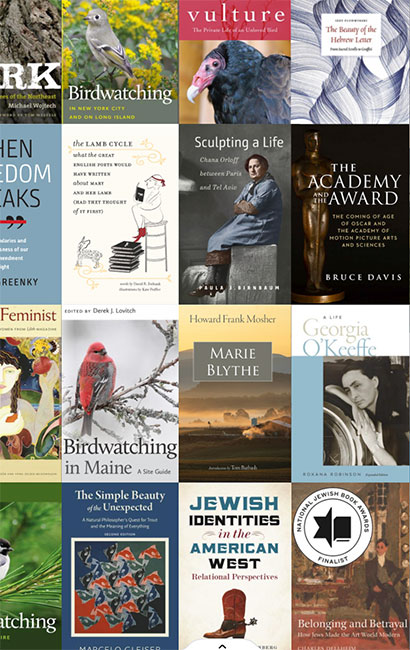
Twenty book covers—first editions in their original languages—and a guide to the “first hundred books” show the multilingual scope, historical depth, and artistic range of this extraordinary body of writing.
Click here for TABLE OF CONTENTS
Endorsements:
“Roskies and Diamant survey Holocaust literature as literature in its own right, limning its dimensions across continents, genres, and languages, tracking its dynamics from the eve of World War II to the early twenty-first century. The scope of the volume is sweeping; the analysis is provocative. The authors’ canon of key works will prompt novices and those conversant in this literature to discover unknown titles and reexamine familiar ones.”—Jeffrey Shandler, Rutgers University
“This is a brilliant and original study of Holocaust literature and memory. Roskies and Diamant’s insights and their wide-ranging approach make this an indispensable book for anyone with a serious interest in Jewish culture and the Holocaust.”—Samuel D. Kassow, Trinity College
-
|
|
|
DAVID G. ROSKIES is the Sol and Evelyn Henkind Chair in Yiddish Literature and Culture at the Jewish Theological Seminary. He also holds a joint appointment in Yiddish literature at the Hebrew University of Jerusalem. Prof. Roskies was elected to the American Academy of Arts and Sciences in 2012 for his contributions to the field of literary criticism. NAOMI DIAMANT is director of Dean’s Office Affairs, Stern School of Business, New York University.
|
|
|
|