Ross A. Virginia

| Environmental Studies


Cold Deserts Research

McMurdo Dry Valleys Soil Research

Antarctica

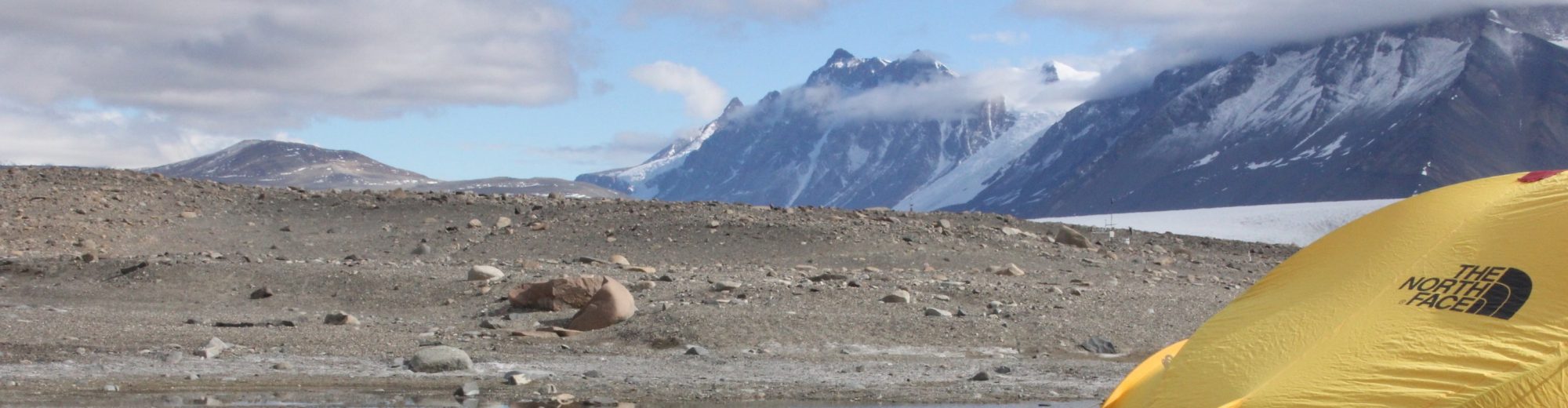
Professor Virginia's interests are ecosystem science and elemental cycling in terrestrial systems. His research focuses on the polar deserts of Antarctica where he is a co-principal investigator on the NSF McMurdo Dry Valley Long-Term Ecological Research Program. Since 1989, he has studied how climate and soil factors influence the establishment, distribution and function of soil biota. These microscopic soil organisms may serve as sensitive indicators of environmental change and human disturbance.

The soils of the Dry Valleys are up to five million years old, and are characterized by poorly developed profiles, low organic matter and water content and high salinity. Despite a general appearance of apparent uniformity, Antarctic soils have a high degree of spatial and temporal heterogeneity in soil properties, hydrologic regimes, and biological composition, which we are relating to the general biological productivity of the dry valleys. The primary research goal is to understand the carbon cycle in the Dry Valleys with an emphasis on the sources of carbon (contemporary and legacy), and their influence upon the distribution and diversity of soil communities.

We are developing a soil carbon budget for the dry valleys based upon systematic regional sampling of soil profiles. The soil organic carbon reservoir far exceeds that of the more productive, yet spatially-limited, dry valley lacustrine and stream ecosystems. The natural abundances of 13C and 15N in soil organic matter indicate that the relative contributions of marine, soil derived, and lacustrine (recent and paleo) sources to soil carbon pools are a function of position in the dry valley landscape (elevation; distance from lakes, streams, or paleolakes; distance from marine sources). The soil carbon cycle in the McMurdo region represents an extreme "end-member" of global soil ecosystems and is a significant component of the overall carbon cycle of the McMurdo Dry Valleys.

For more information about McMurdo Long Term Ecological Research

MCM-LTER Website: http://www.mcmlter.org/index.html

Field Images

Students

Research Teams


Hot Deserts Research

Jornado Desert Ecosystems

New Mexico

My research in New Mexico and previous studies in California are designed to understand the ecology and nutrient cycling dynamics of shrub-dominated deserts. At the Jornada Basin LTER site in southern New Mexico, I work with a group of scientists studying the causes and consequences of desertification and the response of desert shrublands to environmental change. Desertification of the Jornada Basin followed introduction of cattle in the late1800's and has led to the replacement of perennial grasslands by shrublands. The stability of these recent shrublands in response to a changing climate (amount and seasonally of precipitation) will depend on the physiology and ecology of the shrubs and on plant-soil interactions mediated through litter decomposition and soil biota. Results from these field studies are incorporated into simulation models developed by James F. Reynolds at Duke University to predict the response of deserts to climate change and management. A key objective of this work is to better understand the stability of recently desertified habitats and the linkages between deserts and global scale processes. I am also interested in problems associated with the restoration of aridlands.

Field Images

Jornada Research Publications