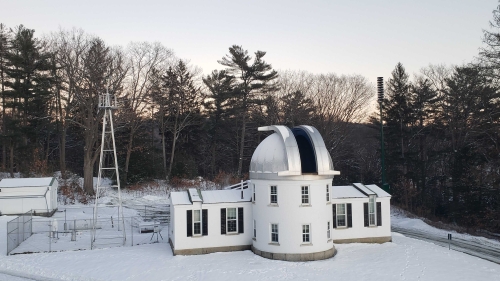
Public Observing Kick-Off Event
Saturday, January 27, 2024 5-8pm
Saturday, January 27, 2024 5-8pm
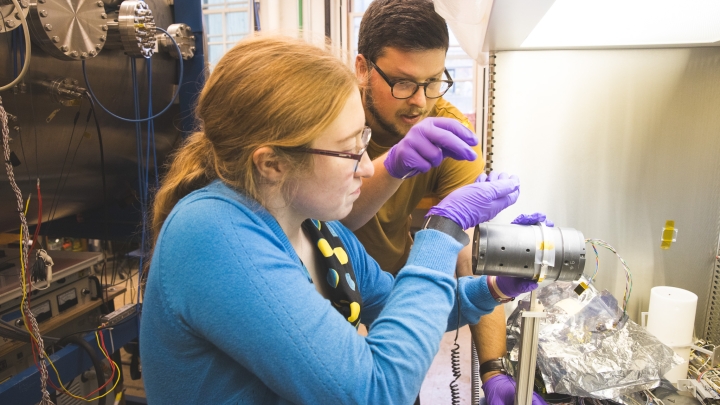
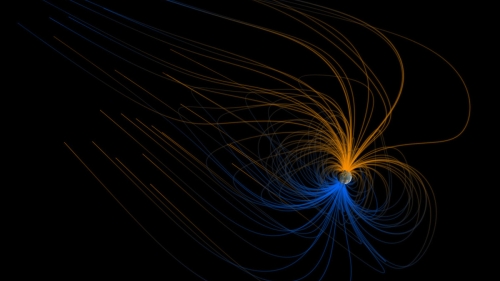
Kristina Lynch's lab is helping to gauge effects of eclipses on the upper atmosphere.
The multi-institutional project was chosen for a concept study as part of NASA's Heliophysics Small Explorers program.
We are Physics & Astronomy's safe space for minoritized genders.

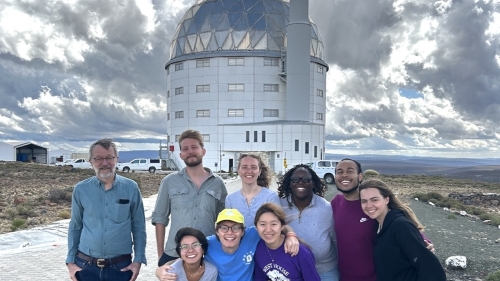
Professor John Thorstensen and students in the Astronomy Foreign Study Program in South Africa discovered new details about the lifecycle of an unusual class of stars.
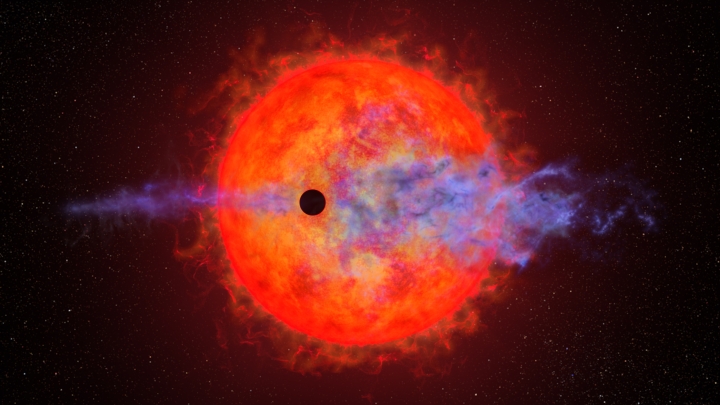
Neptune-sized planet strangely and sporadically burps hydrogen as it circles its sun.
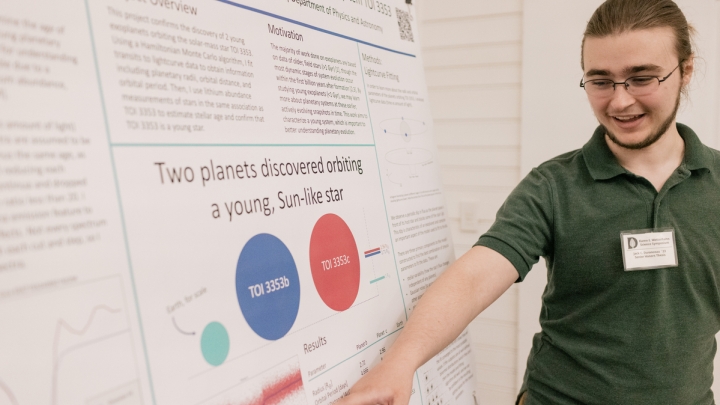
Similar in size and density to Neptune, the planets orbit a young, sun-like star.
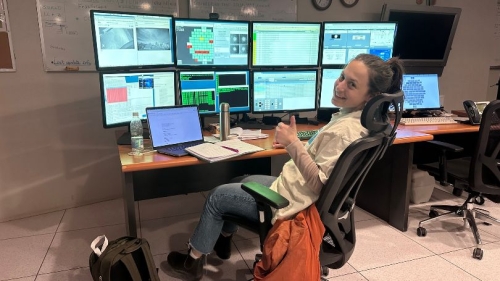
Ella Marin '25 received training on a world-class telescope in Chile as part of her research collaboration with Professor Burçin Mutlu-Pakdil.
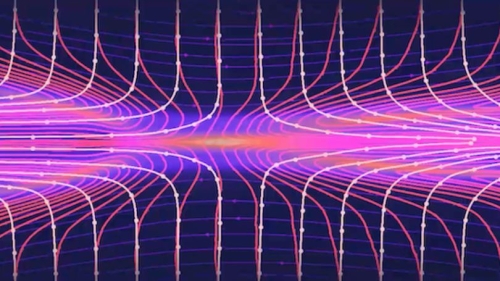
Quanta magazine article features work by Professor Yi-Hsin Liu and Dartmouth student Matthew Goodbred ('23) illuminating the explosive process of magnetic reconnection powering solar flares.
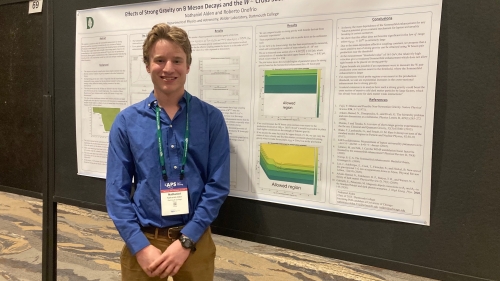
Nathaniel has presented a poster on his research project at the annual April meeting of the American Physical Society, this year held in Minneapolis, April 15-18.