Harry J. Elam, Jr. and Michele Elam: High Stakes of Mixed Race: Post-Race, Post-Apartheid Performance in the U.S. and South Africa

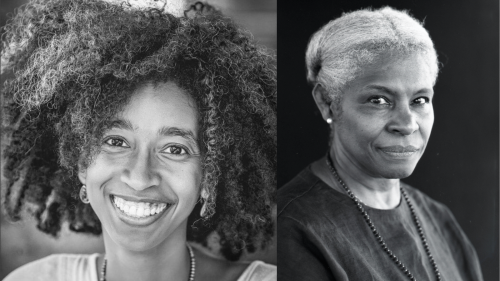
Photo: Harry J. Elam, Jr. and Michele Elam
Thursday April 17, 2008
4:30 pm
Kreindler Auditorium (Room041) Haldeman Center
Free and open to the public.

Michele Elam is Director of African & African American Studies, Director of Undergraduate Studies, and Associate Professor in English at Stanford. She is the author of Race, Work, and Desire in American Literature, 1860-1930 (Cambridge University Press, 2003) and Mixed Race in The New Millennium (forthcoming with Stanford University Press), which analyzes pop cultural interventions into the politics of mixed-race representation from Aaron McGruder to Dave Chappelle. Professor Elam is currently working on another book, The High Stakes of Mixed Race: Post-Race, Post- Apartheid Performance in the U.S. and South Africa, with her husband, Harry J. Elam, Jr., which explores critical questions of civil rights and racial identity in the United States and South Africa through the lens of theatrical performance and examines 21st century theatre as part of the complicated inheritance of Board v. Brown of Education and its promise of racial democracy. She has published articles in journals such as American Literature, Callaloo, Theatre Journal, Genre, and African American Review, from which she just received the 2008 Best Essay of the Year Award for her article, "Dunbar's Children"; and her work also appears in several collections on race and culture, including Subjects and Citizens: Nation, Race and Gender from "Oroonoko" to Anita Hill (Duke University Press 2003) and in W.E.B. Du Bois and the Gender of the Color-Line (U of Minnesota P., 2007). Twice the recipient of the St Clair Drake Outstanding Teaching Award at Stanford (2004, 2006) among other national awards for teaching, Professor Elam offers undergraduate and graduate seminars on Mixed Race Literature and Theory; Women of Color Feminisms, African American Literary History & Theory, Race & Cultural Performance, Race in the Post-Race Era, and Race in Virtual Reality. She belongs to the Society for the Study of Mixed Race Literature; the Society for the Study of Multiethnic Literatures in Europe and the Americas, is on the National Board for the Future of Minority Studies, and has recently been elected to the Modern Language AssociationŐs National Executive Board of the Division for Black Literatures & Culture.

Harry Elam is the Olive H. Palmer Professor in the Humanities, the Robert and Ruth Halperin University Fellow for Undergraduate Education, Director of the Institute for Diversity in the Arts, as well as the Senior Associate Vice Provost for Undergraduate Education at Stanford University. He is author of Taking It to the Streets: The Social Protest Theater of Luis Valdez and Amiri Baraka; and the Erroll Hill Prize winning The Past as Present in the Drama of August Wilson ; and co editor of four books, African American Performance and Theater History: A Critical Reader; Colored Contradictions: An Anthology of Contemporary African American Drama; The Fire This Time: African American Plays for the New Millenium; and Black Cultural Traffic: Crossroads in Performance and Popular Culture. His articles have appeared in American Theater, American Drama, Modern Drama, Theatre Journal, Text and Performance Quarterly as well as journals in Belgium, Israel, Poland and Taiwan, He has also written essays published in several critical anthologies. Professor Elam is the outgoing editor of Theatre Journal and on the editorial boards of Atlantic Studies, Journal of American Drama and Theatre, and Modern Drama. In 2006, Professor Elam was the winner of the Betty Jean Jones award for Outstanding Teaching from the American Theatre and Drama Society, the winner of the Excellence in Editing Award from the Association of Theatre in Higher Education and the winner of the Distinguished Scholar Award from the American Society of Theatre Research. He was also inducted into the College of Fellows of the American Theatre in April 2006.


Cosponsored by the Leslie Center for the Humanities, VOICES The Dartmouth Theater Visiting Artist Program, the Dickey Center for International Understanding, the Department of English and the African and African American Studies Program.