Quick Links

Related Sites

History Department
300 Carson Hall
Hanover, NH  03755
P: (603) 646-2545 or
(603) 646-9503
F: (603) 646-3353
 
Contact Information:
Chair: Walter Simons (walter.simons@dartmouth.edu)
Vice Chairs: David Lagomarsino (david.lagomarsino@dartmouth.edu) [Fall] and Douglas Haynes (douglas.haynes@dartmouth.edu) [Winter & Spring]
 
A&S History Department Administrator:  Gail M. Vernazza (gail.vernazza@dartmouth.edu)
History Department Administrative Assistant:  Bruch Lehmann (kristin.b.lehmann@dartmouth.edu)
 
 
Banner image:
Leonardo Bruni, Historia Florentina, Venice, 1476. Printed on vellum, illuminated bifolium (Dartmouth College, Rauner Special Collections, Lansburgh 36)

Events

Lectures and Symposiums

UNKEPT WOMEN:  Elite Prostitution in Eighteenth-Century Paris

Monday, May 13, 4 PM, L02 Carson Hall

Lecture by NINA KUSHNER D'90, Assistant Professor of History, Clark University


TOPPLING KUCHUM, CROSSING A CONTINENT: Russia's Conquest of Siberia and Expansion Across Eurasia

Tuesday, May 7th, 4 PM, L02 Carson Hall

Lecture by Erika Monahan D'96, Assistant Professor of History, University of New Mexico


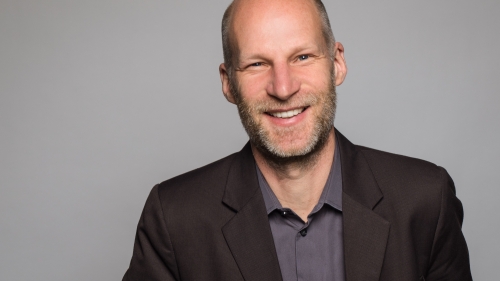
Udi Greenberg

Greenberg

Assistant Professor of History
Office: 305 Carson Hall
Office phone: (603) 646-2524
Fax: (603) 646-3353
Email: Udi.Greenberg@Dartmouth.edu

Address:

Department of History
Dartmouth College
6107 Carson Hall
Hanover, NH 03755

Courses

  • 7: The Nuremburg Trial
  • 51: Modern European Intellectual History
  • 52: Modern Germany 1871-1990
  • 53: World War II: Ideology, Experience, Legacy
  • 96: Nazism: Culture, Society, War


Udi Greenberg offers courses on modern German history, European intellectual history and modern European history. He received his PhD from the Hebrew University of Jerusalem in 2010, and has also studied at the University of Heidelberg, the University of Wisconsin-Madison and the University of California at Berkeley.

Professor Greenberg’s main research interests are the intersections between intellectuals and politics, the history of European political theory, and twentieth century transatlantic cultural interactions, particularly during the Cold War. His current research, entitled Cold War Weimar: German Émigrés and the Intellectual Origins of the Cold War, traces the intellectual origins of the Cold War to Central European theories developed during the interwar years. Professor Greenberg examines a selection of influential yet overlooked political thinkers who emigrated to the United States from Germany in the 1920s and 1930s and became prominent members of U.S. intellectual and political circles in the aftermath of World War II. Through an examination of their intellectual and political activities, he argues that prominent Cold War theories and terminologies should be understood not only as a reaction to the global struggle with Communism, but also as a continuation of debates over the nature of democracy, the relationship between religion and politics, and the role of intellectuals, political groups, and institutions in public life, debates that were central to the politics of 1920s Germany. Based on documents from Germany, Israel, Great Britain and the United States, this research has been published in several journals, including the Journal of Contemporary History and the Journal of European Studies.

Last Updated: 9/8/12