|
Aristotle (384-322 B.C.) described political science as the overarching science, arguing that it helps us understand who we are as human beings and how we can live happy and productive lives in communities. Modern political science maintains the ancient Greek concern with the nature of order and governance at every level of social interaction. We study the collective identities, beliefs and institutions that make communities possible, and that are in turn shaped by communities. We are also attentive to failures at community building, and to the divisions, conflicts, and wars to which such failures give rise. We explore these issues from diverse perspectives rooted in the humanities, the social sciences, and the natural sciences. Faculty and students analyze texts, conduct surveys, experiments and case studies, and collect and analyze aggregate data. We offer courses in American politics, comparative politics, international relations, political theory and methodology. Some of our courses and seminars cross fields, and even disciplines.
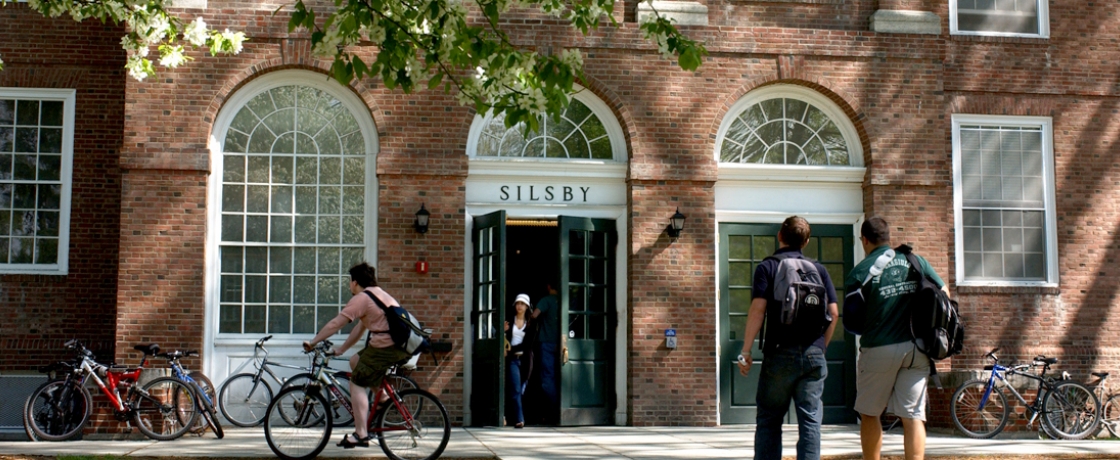
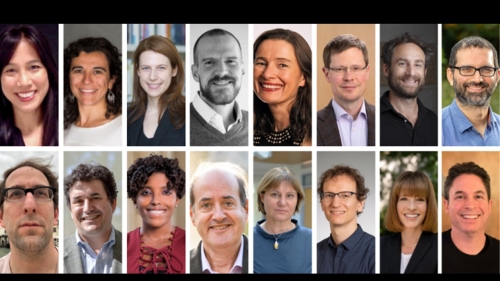
The Government Department at Dartmouth is one of the most popular majors in the College, with 270 majors and 27 minors in the 2003-04 academic year. Our thirty-three faculty are accomplished researchers and dedicated teachers, making us one of the premier institutions in the country for the undergraduate study of political science. The Department has an unusually large and distinguished group of international relations scholars, and is also well-represented in American and comparative politics, political theory, and methodology. The research interests of the faculty are remarkably diverse, and include such topics as religious fundamentalism and democracy, the reasons for invalid ballots, the consequences of American power for the future course of international relations, the possibilities and limits of democratization, comparative genocide, women?s movements in Latin America, reconciliation efforts in central Africa and political economy and security in northeast Asia.
In addition to our course offerings, the Department sponsors numerous lectures, seminars, and conferences. Many are co-sponsored with the Dickey or Rockefeller Centers. Most of these events are open to students, providing opportunities for them to meet and interact with Dartmouth faculty and prominent visitors from other universities, the policy world, and journalism. Visitors this year have included journalists David Brooks and Lewis Lapham, His Royal Highness Prince Hassan of Jordan, Associate Justice of the Supreme Court Stephen Breyer and many others.
The Department runs quarter-long off-campus programs in Washington, D.C. and London. The program in Washington offers students the experience of working in a political office or organization in combination with a course of study designed to place the internship experience in a broader academic perspective. The London program, run in conjunction with the London School of Economics and Political Science (the LSE), allows the students to take two seminars at the LSE and one with a visiting Dartmouth professor. The Rockefeller Center offers an exchange program at Keeble College, Oxford for selected government majors, and other Departments of the College offer similar foreign study and language programs at various locations in Europe, the Middle East, Africa, Asia, and Latin America. The programs are competitive as they have restricted enrollments -- usually under twenty students -- but interested government majors typically participate in one or more of these programs in their second or third years of study.
Dartmouth has developed a unique niche for itself as a liberal arts college with a university faculty. The Government Department prides itself on melding the best of these two educational traditions. We are like a college in that our doors are open to students: there is intensive student-faculty interaction, much of it one-on-one. We resemble a university because our faculty are research-oriented and as productive and eminent as their colleagues at the finest research universities. Students profit from both sets of attributes in class, in informal discussions, and in collaborative research with professors.
A Chinese curse said: May you live in interesting times.? In interesting times, political science becomes a particularly compelling field of study?and our times are certainly ?interesting.? At home, we are moving toward a presidential election, and one that finds the electorate unusually divided on a range of important domestic and foreign policy issues. The world at large faces a series of major challenges, including major ethnic and national rivalries, racism and the legacy of colonialism, the proliferation of weapons of mass destruction, differential rates of economic development, and a world-wide Aids epidemic, all of which severely challenge the ability of diverse societies to develop or sustain capable and popularly supported governments. By studying political science, students will not only learn about many of these issues, but develop the conceptual skills and methodological tools to put them in a broader perspective and to make sense of new challenges and issues as they arise.
We invite students to consider Government as their major. Knowledge of the subject aside, our program will develop and hone your skills at thinking and expression (written and oral), deepen your commitment to social justice and political participation, help position you to gain entrance to graduate or professional school, and, as Aristotle believed, live happy and productive lives.
|