German Studies Faculty Help Comparative Literature Graduate Program Shine at 30
Dartmouth's Comparative Literature M.A. program continues to graduate illustrious alumni who go on to become or continue as writers, translators, or academics.
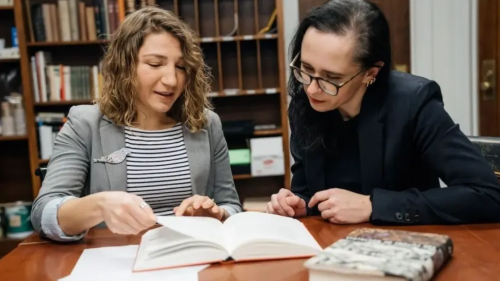

Dartmouth's Comparative Literature M.A. program continues to graduate illustrious alumni who go on to become or continue as writers, translators, or academics.
"I just returned from the Berlin Film Festival. Among the many films I saw, one clearly stuck out: Favoriten, by Austrian director Ruth Beckermann." - Gerd Gemünden, Professor in German and Film & Media Studies
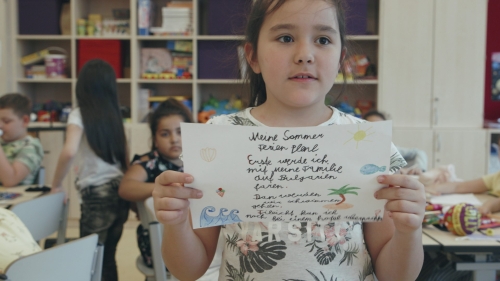
"Postdoctoral scholar Jeannette Oholi researches and introduces students to Black German and Black European writers, poets, and literary scholars." - Faculty of Arts and Sciences

Jeannette Oholi and Marie Larose will have a conversation with Jon Cho-Polizzi on Tuesday, Feb. 6, reading at 7pm, Norwich Bookstore, VT.

Like every year, our FSP Off-Campus Program students had an amazing time during our FSP/LSA+ in Berlin and explored many facets of the city's rich history and culture.
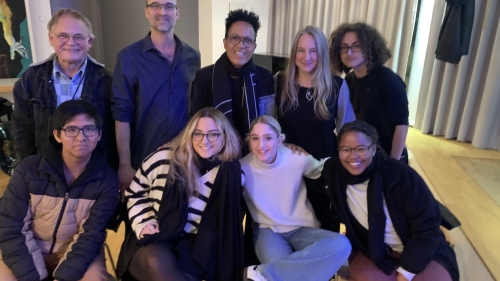
Students from our Living and Learning Affinity housing community sold a variety of home-baked pastries and cookies and will donate their bake sale proceeds to a local foodbank.

Looking for a science internship in Germany? The German Studies and Biology Departments offer the opportunity to intern with the Max-Planck-Institute for Biological Intelligence outside Munich.

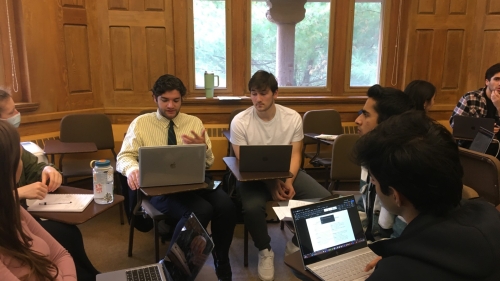
Students in GERM 15 / JWST 37 / COLT 64 Nazis, Neonazis, Antifa and the Others immersed themselves in oral history interviews and video testimonies of Holocaust survivors
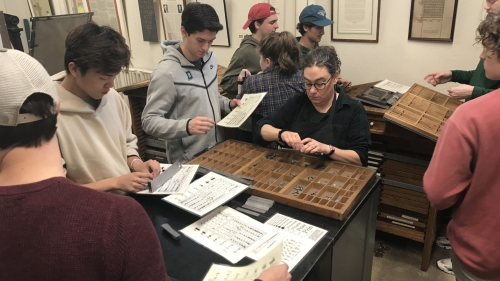
With the help of Sarah M. Smith and Betty J. Kim at Dartmouth's Letterpress Studio, the GERM 16 / JWST 25.03 class learned to set type and carve their own rubber prints.
The Department of German Studies at Dartmouth College invites applications for a full-time tenure-track Assistant Professor, to begin on July 1, 2024. Preferred areas of expertise are Environmental Humanities, Black German Studies, or both.