The Modal Auxiliaries in English:
English features a group of "helping verbs" that function differently from most others: "can", "may", "must", "shall", "should", and "will". They do not describe an action, but express an attitude toward an action that is usually represented by an infinitive. Their present-tense conjugations resemble the simple past of strong verbs ("the truth will out"), and they do not use "to" when combining with infinitives ("she can go home"). They form past and future tenses in various ways: "I can," "I could," "I had been able to," "I will be able to"). Note also that "to" is omitted when citing the auxiliary verb itself; we do not say "to must."
The Modal Auxiliaries in German:
The German modal auxiliaries likewise express an attitude toward, or relationship to, an action:
| dürfen | to be permitted to, "may" | können | to be able to, "can" |
| mögen | to like |
| müssen | to have to, "must" | sollen | to be supposed to, "should" |
| wollen | to want, "will" |
Their present tense conjugations resemble the simple past forms of strong verbs:
| Infinitive | ich | du | er/sie/es | wir | ihr | Sie | sie |
| dürfen | darf | darfst | darf | dürfen | dürft | dürfen | dürfen |
| können | kann | kannst | kann | können | könnt | können | können |
| mögen | mag | magst | mag | mögen | mögt | mögen | mögen |
| müssen | muss | musst | muss | müssen | müsst | müssen | müssen |
| sollen | soll | sollst | soll | sollen | sollt | sollen | sollen |
| wollen | will | willst | will | wollen | wollt | wollen | wollen |
 |
 |
|
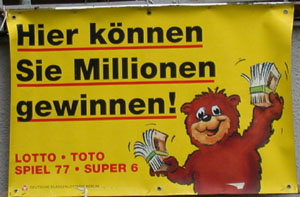
They don't bite, they just want to play!
[Ad for the Berliner Eisbären = ice hockey team] |
|
|
|
|
|
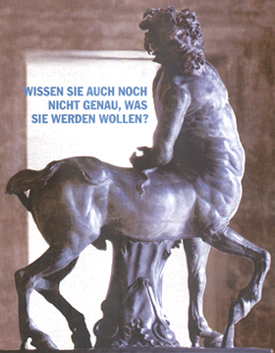
Do you also not know exactly
|
|
With the exception of "mögen", the modals generally combine with an infinitive (without "zu"). Some examples:
| Darf man hier rauchen? | Is one allowed to smoke here? | Sie kann es nicht finden. | She can't find it. |
| Ihr müsst langsamer sprechen. | You have to speak more slowly. |
| Willst du jetzt nach Hause gehen? | Do you want to go home now? |
| Mir dürfen Sie alles sagen. | You may tell me everything. | Ihr könnt das in der Drogerie kaufen. | You can buy that in the drugstore. |
| Das sollst du wissen. | You should know that. |
| Ich will jetzt schlafen. | I want to sleep now. |
It is also possible to combine two modals this way:
| Das sollst du können. | You should be able to do that. | Ich darf das wollen. | I'm allowed to want that. |
| Sie müssen uns sehen können. | They have to be able to see us. |
| Wir müssen nur wollen.* | We just have to want. [see below]. |
*"Müssen nur wollen" is the title of a song by the group Wir sind Helden (We Are Heroes). Here are the lyrics.
"mögen" normally does not combine with another verb, except in its subjunctive form, "möchte". In the indicative, it means "to like [something]" (although see "special meanings":)
| Ich mag diese Musik nicht. | I don't like this music. | Wer möchte mit mir Tennis spielen? | Who would like to play tennis with me? |
| Sie möchte lieber über etwas anderes sprechen. | She would prefer to talk about something else. |
The modals do not require an infinitive, however. Sometimes it is only implied:
| Ich kann das. | I can do that. | Wir müssen jetzt nach Hause. | We have to go home now. |
| Was soll das? | What's that supposed to mean? | Ich will noch ein Stück Kuchen. | I want another piece of cake. |
Sometimes the infinitive is dispensed with in order to avoid an indelicate phrase:
| Mutti, ich muss mal! | Mommy, I have to go (to the bathroom)! | Du kannst mich mal! | You know what you can do (= ~ kiss my ass). |
To find out about using modal auxiliaries in the passive voice, click here.
Models in the Past Tenses:
The modals' past forms resemble those of the other "irregular strong verbs", although there are two forms of the past participle, as explained below:
| Infinitive | Simple Past | Past Participle | Subjunctive |
| dürfen | durfte | gedurft/dürfen | dürfte |
| können | konnte | gekonnt/können | könnte |
| mögen | mochte | gemocht/mögen | möchte |
| müssen | musste | gemusst/müssen | müsste |
| sollen | sollte | gesollt/sollen | sollte |
| wollen | wollte | gewollt/wollen | wollte |
Examples of the Simple Past Tense with Modals:
| Sie durfte nicht zu Hause rauchen. | She wasn't allowed to smoke at home. | Ich konnte ihn nicht hören. | I couldn't hear him. |
| Mochtest du das nicht? | Didn't you like that? |
| Ich musste aufs Klo. | I had to go to the bathroom. | Sie sollte die Bücher mitbringen. | She was supposed to bring the books along. |
| Er wollte etwas Billigeres kaufen. | He wanted to buy something cheaper. |
Forming the Present Perfect and Past Perfect Tenses with Modals:
There are two ways in which modals form past participles. When there is no accompanying infinitive, the modals act like irregular strong verbs:
| Unsere Eltern waren sehr streng, wir haben nichts gedurft. | Our parents were very strict; we weren't permitted to do anything. | Einmal habe ich das gekonnt. | Once I could do that. |
| Sie hat ihn gemocht. | She liked him. |
| Du hast das gemusst. | You had to do that. | Ich habe es gesollt. | I was supposed to. |
| Du hast es so gewollt. | That's how you wanted it. |
When the modal is associated with another verb, the two combine in the perfect tenses to form a double infinitive:
| Ich habe nichts sagen dürfen. | I wasn't allowed to say anything. | Wer hat das wissen können? | Who could have known that? |
| Alle Kinder haben helfen müssen. | All the children had to help. |
| Er hat mehr tun sollen. | He was supposed to do more. | Ich habe so etwas immer machen wollen. | I always wanted to do something like that. |
The double infinitive can easily become awkward, and most speakers prefer to use the simple past.
In dependent clauses, the double infinitive stays at the end, and the finite verbs slips into the second-the-last position:
| Er ist unglücklich, dass er erst nach dem Konzert hat essen dürfen. | He is unhappy that he wasn't allowed to eat until after the concert. | Bist du sicher, dass du das so gut hättest schreiben können? | Are you sure, that you could have written that so well? |
| Ich weiß nicht, wer das hat machen müssen. | I don't know who had to do that. |
| Wir haben geschlafen, obwohl wir eigentlich hätten arbeiten sollen. | We slept, although we were actually supposed to work. |
| Es ist schade, dass du das nicht mehr hast machen wollen. | It's too bad that you didn't want to do that any more. |
In the above examples, the modal was put into a perfect tense. As in English, the modal can have a different meaning when combined with another verb that is in the past. Note the distinctions:
| Sie hat das sagen dürfen. | She was allowed to say that. |
| Sie darf das gesagt haben. | She may have said that. [see next section on Special Meanings] | Er hat mir einen Brief schreiben können. | He was able to write me a letter. |
| Er kann mir einen Brief geschrieben haben. | He may have written me a letter. [see next section on Special Meanings] |
| Sie haben mich nach Hause tragen müssen. | They had to carry me home. |
| Sie müssen mich nach Hause getragen haben. | They must have carried me home. |
| Ihr habt mir helfen sollen. | You were supposed to help me. |
| Ihr sollt mir geholfen haben. | You are supposed to have helped me. |
| Er hat es finden wollen. | He wanted to find it. |
| Er will es gefunden haben. | He claims to have found it. [see next section on Special Meanings] |
Special Meanings of the Modal Auxiliaries:
"dürfen" has several meanings:
1) Usually it expresses permission or a right to do something ("may").
| Darf ich jetzt essen? | May I eat now? | Jeder darf seine Meinung äußern. | Everyone may express his or her opinion. | Darf ich bitte zu Ende reden? | May I please finish what I'm trying to say? |
2) In the negative, "dürfen" can refer to a moral obligation, corresponding to "müssen" in the positive:
| Wir dürfen nicht zu laut sein. | We mustn't be too loud. |
3) Although the use is now somewhat old-fashioned, "dürfen" can mean 'need only':
| Du darfst nur anrufen, und ich komme sofort. | You need only call, and I'll come right away. |
4) The subjunctive form ("dürfte") can be used to express mild conviction:
| Das dürfte wohl wahr sein. | That may well be/is probably true. | Das Radio dürfte jetzt funktionieren. | The radio probably works now. |
| Die Polizei dürfte Sie fragen, wo Sie waren. | The police will probably ask you where you were. |
"können" also has a variety of meanings:
1) To have the ability or power:
| Kannst du Klavier spielen? | Can you play the piano? | Er kann ziemlich hoch springen. | He can jump pretty high. |
2) As a transitive verb, meaning to know how to do something or to know something thoroughly:
| Sie kann gut Deutsch. | She speaks German well. |
| Er kann das Gedicht auswendig. | He can say the poem by heart. |
3) To be able to bear or endure:
| Ich kann kein Blut sehen. | I can't stand the sight of blood. |
4) To be possible or likely:
| Das kann wahr sein. | That could/may be true. |
| Das kann nicht sein. | That can't be true. | Es könnte wohl regnen. | It could well rain. |
5) As a mild form of command:
| Sie können jetzt gehen. | You can go now. |
| Ihr könntet uns mal helfen. | You could give us a hand. [Note that this is in the subjunctive] |
6) As a form of permission, indicating that there is nothing in the way:
| Meinetwegen kann sie mitspielen. | As far as I'm concerned, she can play, too. |
| Ihr könnt gern mitkommen. | Y'all are welcome to come along. |
| Sie können es ruhig nehmen. | You're welcome to take it. |
7) As an indication of an opportunity or good reason to do something:
| Sie können stolz auf ihr Kind sein. | You can be proud of your child. |
| Wir können jetzt essen. | We can eat now. |
"mögen":
1) To like something:
| Ich mag keine Eier. | I don't like eggs. | Sie mag ihn nicht. | She doesn't like him. |
2) "mögen" is frequently used in the subjunctive to shape requests or wishes:
| Ich möchte ein Glas Leitungswasser. | I'd like a glass of tap water. | Möchtest du etwas anderes machen? | Would you like to do something else? |
3) "mögen" can be used in the special subjunctive for third-person commands:
| Möge sie glücklich sein. | May she be happy. |
| Möge Gott dir helfen. | May God help you. |
4) To indicate possibility or probability. In this sense, "mögen" is always used positively. To deny a possibility, use "können" ("Das kann nicht sein"):
| Es mag jetzt zu spät sein. | It may be too late. | Das möchte wohl ein Problem werden. | That might well become a problem. |
5) To grant or concede a point:
| Er mag so viel von seinen Leistungen reden, wie er will, ich finde ihn trotzdem doof. | He can talk all he wants about his accomplishments - I still think he's stupid. |
| Er möge schreien soviel er will, wir kaufen es ihm nicht. | He can yell as much as he wants, but we won't buy it for him. |
|
|
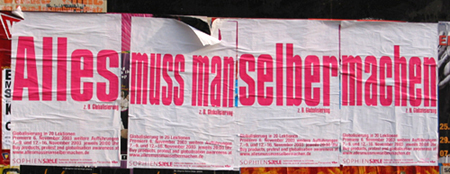 |
| One has to do everything oneself | |
"müssen":
1) To indicate necessity or obligation:
| Muss ich das tun? | Do I have to do that? | Muss das sein? | Is that necessary? |
| Jeder muss irgendwann sterben. | Everybody has to die sometime. |
| Ich musste lachen. | I had to laugh. |
2) With "müssen", a strong obligation is expressed only in the positive. In contrast, "nicht müssen" means "don't have to." To translate "must not" use "nicht dürfen" or "nicht sollen":
| Du musst mehr essen. | You must eat more. |
| Du musst nichts sagen. | You don't have to say anything. |
| Sie muss nicht mitsingen. | She doesn't have to sing along. |
3) The necessity can be implied in an expression of strong probability:
| Du musst sehr enttäuscht gewesen sein. | You must have been very disappointed. | Das muss weh tun. | That must hurt. |
4) There can be an implication that the necessity is unfortunate:
| Gerade mich musste er sehen. | He had to see me, of all people. | Das musste kommen! | Of course that had to happen! |
|
|
 |
| You should read more. | |
"sollen":
1) To indicate moral constraint (compare #2):
| Du sollst nicht töten. | Thou shalt not kill/You shouldn't kill. |
| Du sollst nicht falsch gegen deinen Nächsten aussagen. | Thou shalt not bear false witness against thy neighbor. | Sie sollen sich besser benehmen! | You should behave better! |
2) In contrast to the use cited in #1 above, "sollen" frequently appears in the subjunctive (but not with würde) when an English-speaker might not expect it to. In that form it implies a less strict obligation (and often precedes an admission that the obligation will not be fulfilled):
| Ich sollte meine Mutter anrufen, aber ich habe jetzt keine Zeit. | I ought to call my mother, but I don't have any time right now. |
| Ich sollte eigentlich keinen Nachtisch bestellen. | I really shouldn't order desert [but I'm going to]. |
| Du solltest mehr lesen. | You [probably/really] ought to read more. |
3) As a command:
| Sie sollen sofort kommen. | You are to come right away. | Er soll um fünf da sein. | He should be there at five. |
|
|
 |
| We're making our village more beautiful. | |
4) To indicate an intent:
| Dieser Computer sollte die Arbeit leichter machen. | This computer was supposed to make my work easier. |
| Soll das ein Witz sein? | Is that supposed to be a joke? |
5) To indicate a logical probability:
| Eigentlich soll das eine größere Zahl ergeben. | That should actually produce a higher number. |
6) To ascertain someone's will:
| Sollen wir jetzt essen? | Shall we eat now? |
7) Other senses of "supposed to be":
| Dresden soll sehr schön sein. | Dresden is supposed to be [is said to be] very beautiful. |
| Er sollte schon längst hier sein. | He was supposed to be here long ago. |
| Ich soll das Geld am ersten des Monats erhalten. | I'm supposed to get the money on the first of the month. |
8) In the simple past tense, "sollen" can mean "would" or "to be to" to indicate that a further development will later take place in a narrative:
| Er sollte bald sein blaues Wunder erleben. | He would soon get the shock of his life. |
| Sie sollte später lernen, was wirklich mit dem Geld geschehen war. | She would later learn what had really happened to the money. |
| Es sollten dann viele Menschen an dieser Krankheit sterben. | Many people were then to die of this disease. |
"wollen":
1) To express want, desire, or intention:
| Ich will dich nie wieder sehen. | I don't ever want to see you again. | Was willst du jetzt? | What do you want now? |
| Sie will nur das Beste für ihr Kind. | She only wants the best for her child. |
| Wir wollen ihren Geburtstag feiern. | We want to celebrate her birthday. |
| Er wollte es heute vorbeibringen. | He was going to bring it by today. |
| Wir wollen nicht weiter davon sprechen. | We won't mention it any more. |
2) To claim or profess:
| Sie will nichts gehört haben. | She claims to have heard nothing. | Er will das Geld gefunden haben. | He claims to have found the money. |
| Dieses Buch will die umfassendste Studie sein. | This book professes to be the most complete study. |
3) To be about to:
| Ich wollte dich gerade anrufen. | I was just about to call you up. |
| Er ist gekommen, als wir gehen wollten. | He came as we were about to leave. |
4) Some other meanings:
| Wie wollen Sie das tun? | How do you expect to do that? |
| Wir haben stundenlang gewartet, aber er wollte nicht kommen. | We waited for hours, but he didn't show up. |
| Bücher wollen gelesen werden. | Books are supposed to be read. |
| Entspannung will gelernt sein. | The ability to relax needs to be learned. |
| Das will nicht viel sagen. | That doesn't mean much. |
|
|
 |
| I want a legal protection that represents my interests, even on the internet. | |