You may be using a Web browser that does not support standards for accessibility and user interaction. Find out why you should upgrade your browser for a better experience of this and other standards-based sites...


Dartmouth Home  Search  Index

Dartmouth Home | SearchIndex

Dartmouth home page
Dean of the College

Dean of the College > Documents >


Dean of the College Mission Statement

Fundamental to the College's mission of intellectual excellence is the belief that education is formative, both in and outside of the classroom.  Dartmouth College has a rich and long tradition in liberal arts learning which recognizes that education is a continuum that extends beyond the four walls of the classroom.  Dartmouth has developed an integrated curriculum which includes a well-focused and sequential major requirement combined with a general education component that encourages breadth and nurtures curiosity.  Dartmouth professors are respected leaders in their fields; they conduct important scholarship and research as an essential component of teaching and classroom learning.  Yet, beyond the curriculum Dartmouth also provides a wealth of opportunities for its students which complement and strengthen their academic experience.

Tom Crady, Dean of the College, has overall responsibility for the supervision, coordination, long-range planning, and budgeting for most of the offices concerned with "student life," including First-Year and Upperclass Deans, Residential Life, Student Life, Collis Center and Student Activities Office, Dining Services, Career Services, Accessibility Services,  College Health Service, Outdoor Programs, Athletics and Recreation ,the Office of Pluralism and Leadership ,  Undergraduate Judicial Affairs, Academic Skills Center, and Safety and Security.  The Dean also has responsibility for managing three College auxiliaries—the Dartmouth Skiway, the Hanover Country Club, and the Morton Farm.

Despite the diversity of programs within the Dean of the College division, all the areas share a common set of objectives: 

  • In partnership with the faculty, foster the academic and intellectual growth of students and support the College's central educational purpose. 
  • Work with students to create a safe, healthy, educational, and socially stimulating residential community. 
  • Articulate, affirm, and maintain standards of conduct for responsible student behavior within the College community. 
  • Sponsor a rich variety of co-curricular opportunities for students' intellectual, physical, social, emotional, and moral growth and development. 
  • Provide support for the diverse community of students and staff and develop educational opportunities for all community members to be enriched by one another. 
  • Encourage students to be self-aware and to make informed decisions in shaping their college years and subsequent lives.

These six objectives are based on the notion that, while the College maintains selected graduate programs and professional schools, its principal business is undergraduate education.  Dartmouth College is committed to excellence and seeks to attract the nation's brightest students and faculty who are leaders in their field.  The College strives to provide the necessary resources to support its mission of academic excellence. 

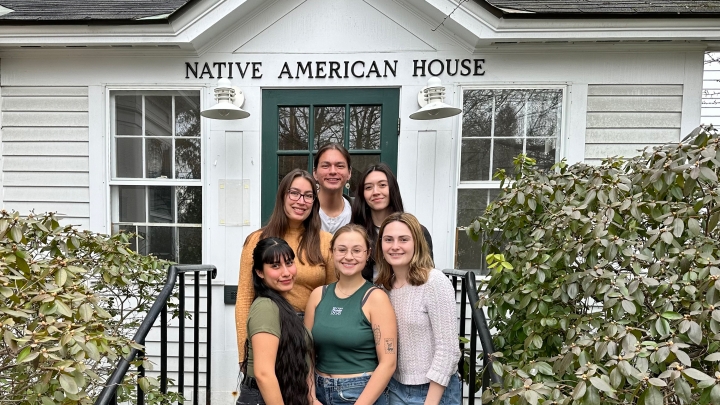
The principal purpose of the office of the Dean of the College is to enhance undergraduate education.  The various offices in this area work with students, administrators, and faculty in order to coordinate and integrate the academic and non-academic lives of the students so that their educational experience is the best that it can be.  Academically focused program areas such as the Upperclass and First-Year Dean's Offices as well as the Academic Skills Center, the Intensive Academic Support Program, the International Office, the Native American Program, the Center for Women and Gender, Career Services and various residential life activities seek to strengthen the total educational experience of undergraduates.

In addition, the Dean of the College office is involved in advancing what is commonly referred to as "the intellectual life" of the College.  To that end, the Office has developed programs and initiatives which seek to foster a campus culture which supports and nurtures intellectual growth.  The first-year student research grants, residential life scholarships, tutoring programs, study groups coordinated with academic departments, peer academic advising programs, minority scholar programs, Graduate Student-in-Residence Program, academic affinity houses, the coordination of faculty advising for first-year students, and graduate school advising efforts are examples of this effort.


Last Updated: 4/21/08