Overview Of Research
In this lab, we are studying the structure and dynamics of the auroral ionosphere. This study has several parts. Sounding rocket missions such as GNEISS, APEP, and Kinet-X (Delamere) use multiple-payload probes to look at spatial and temporal variations in auroral precipitation and ionospheric structure. Data analysis studies of the Poker Flat ground-based array and the THEMIS GBO auroral imaging database and the ESA SWARM satellite data sets allow statistical and machine learning investigations of auroral processes. Laboratory plasma studies in a large calibration/plasma vacuum chamber (the “Elephant“) allow us to characterize the response of our particle detectors to the thermal auroral plasma, and the response of an ionospheric-like thermal plasma to the presence of our probes. Many students both undergraduate and graduate work in our lab, and the development of the Arduino-based “Boblet” subpayload has been a student-centered small-spacecraft design and launch project. Recent efforts are focused toward making the best use of recent developments in commercial small spacecraft technologies for auroral science. Many of the Rocket Lab students are actively involved in analysis and development projects, particularly the newly funded GNEISS rocket. The 317 lab has recently started a number of simulation projects oriented around developing a better understanding of ionospheric responses to auroral forcing in the form of electric fields, currents, and energetic particles. These studies use the GEMINI ionospheric model which can ingest measurements of these drivers and simulate the full, three-dimensional plasma in the volume surrounding an auroral structure.
Ongoing Projects
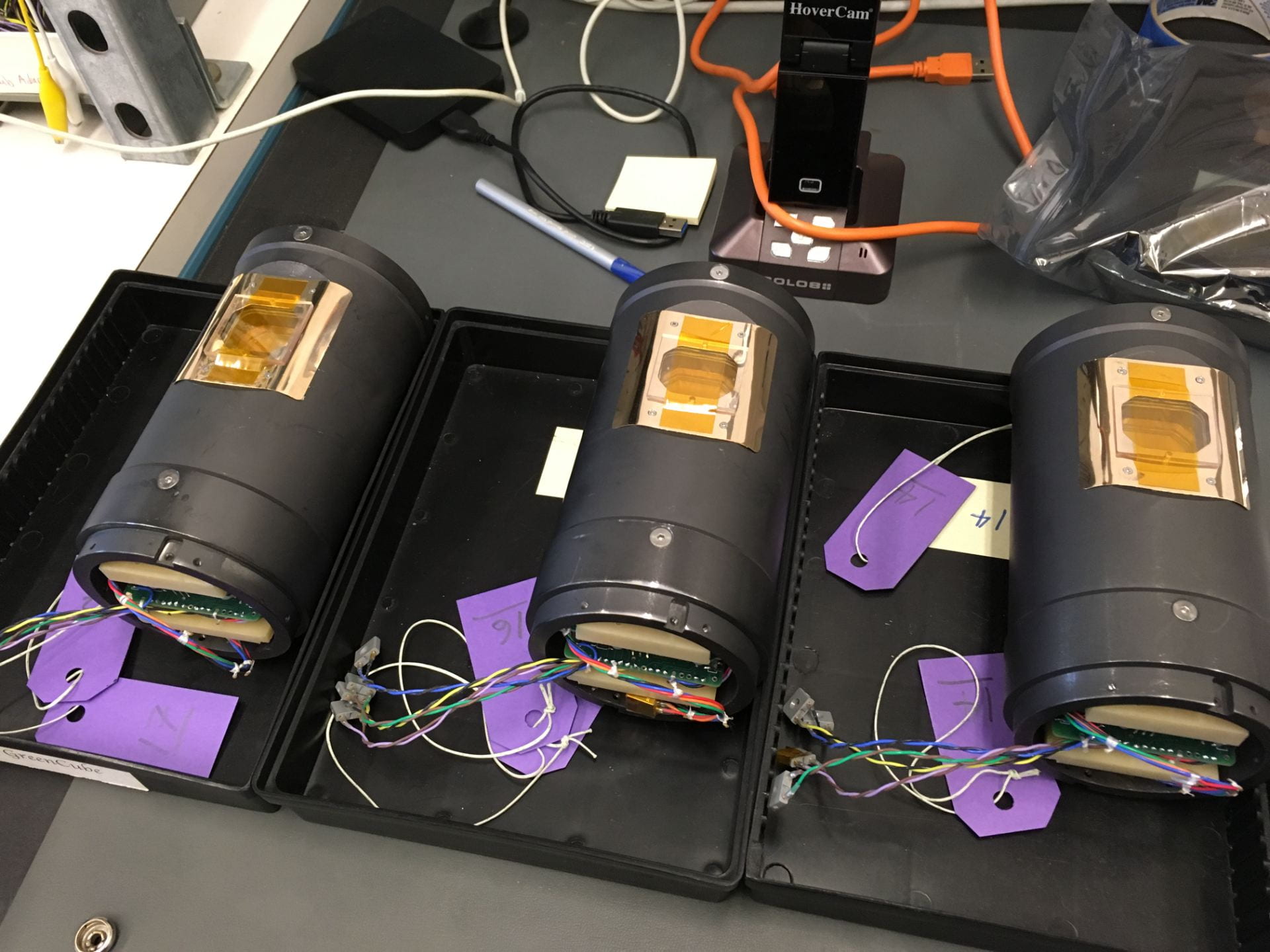


Explore more on the Laboratory Study Page
Investigation Title: Elephant
Principal Investigator and Institutions: Kristina Lynch (Dartmouth College)
An NSF/DOE Career grant funded the ELEPHANT project.